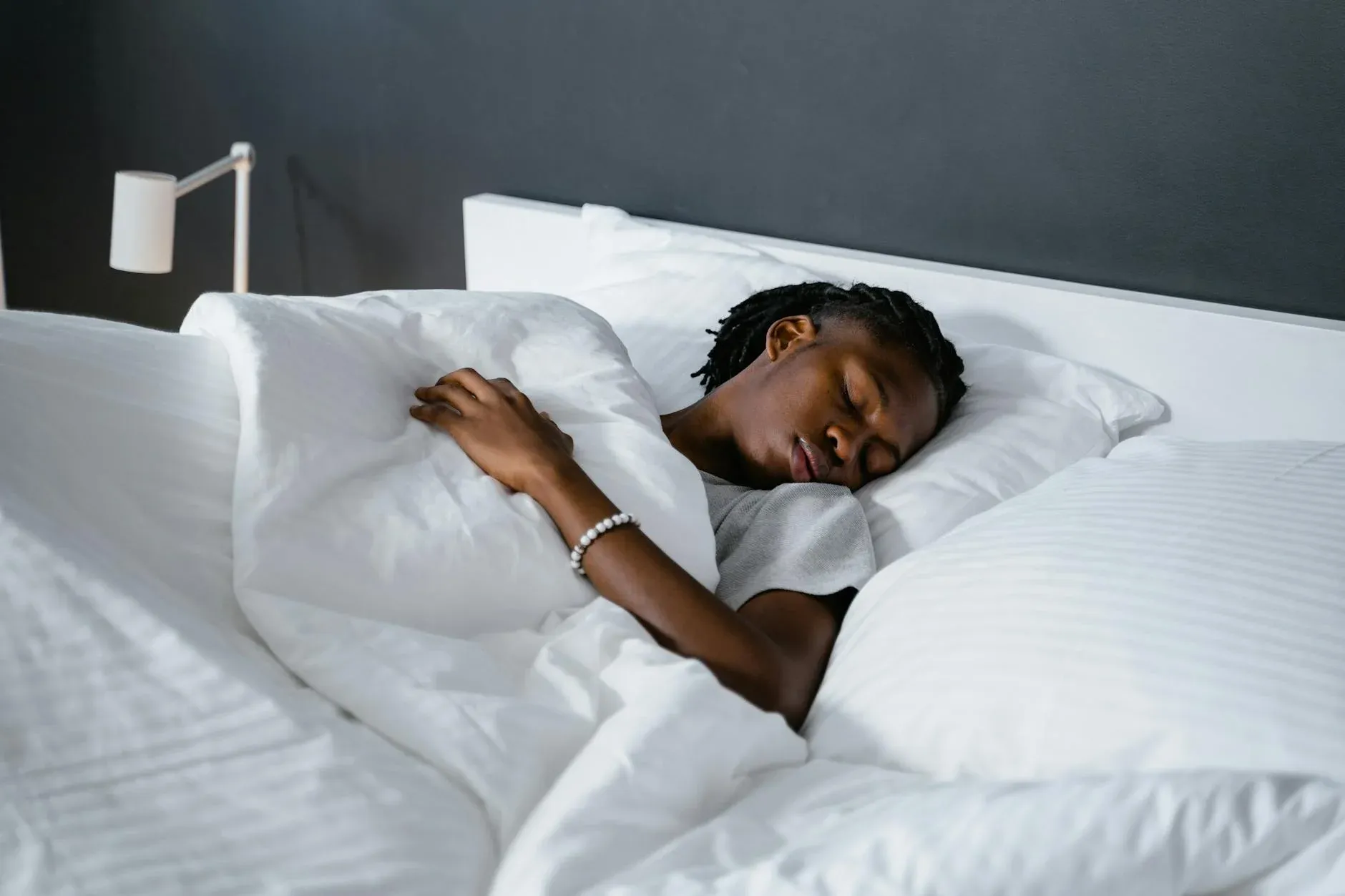
If you want to know why your lifts feel flat even though you're eating and training well, check your sleep. The effect of sleep restriction on testosterone is among the best-documented hormonal findings in exercise science — and it's brutal. One week of five-hour nights, in healthy young men with normal baseline testosterone, drops total T by 10 to 15 percent. That's the same magnitude some TRT clinics measure before prescribing replacement.
The study that cemented this was Leproult and Van Cauter's 2011 paper at the University of Chicago. They took 10 healthy men, age 24 on average, and restricted their sleep to 5 hours a night for one week. Total testosterone dropped across the board — not a little, not among a subset, but consistently. And critically, no supplement, no diet change, no training adjustment reversed it. The only fix was sleep.
Why sleep matters for testosterone
Most of your daily testosterone production happens during sleep — specifically during REM and the first 3 hours of stage 3 deep sleep. If you're only sleeping five hours, you're compressing or eliminating several REM cycles, and your nocturnal testosterone pulse gets truncated.
This is why afternoon naps don't compensate. The pulse is tied to the first consolidated sleep block of the night. A 6-hour fragmented night followed by a 90-minute afternoon nap isn't equivalent to 7.5 hours of consolidated sleep. The hormonal math doesn't work that way.
The 8-hour threshold
The data clusters around a practical threshold: 7.5 hours in bed (roughly 7 hours of actual sleep) is the minimum at which nocturnal testosterone production hits full capacity for most adult men. Below that, you're taking a tax. Above it, the marginal returns to additional sleep on T production are small.
Translation: the gap between 6 hours and 7.5 hours matters a lot. The gap between 7.5 and 9 hours barely registers on testosterone, though it does matter for other recovery markers.
What chronic sleep restriction looks like
The 2011 study looked at one week. Longitudinal data on chronic sleep restriction — months or years of 5 to 6 hours per night — looks worse. The 2016 Spanish study of 75 men with chronic sleep restriction averaged 22 percent lower total T than a matched sample sleeping 7.5 hours. That's approaching the threshold where clinicians start considering replacement therapy.
This compounds with the stress, caloric deficit, and training volume that typical lifters layer on top of sleep loss. A guy working 60-hour weeks, eating 2,400 calories when he needs 2,800, sleeping 6 hours, and benching four times a week is creating an endocrine environment that fights every training adaptation he's trying to produce.
The training performance link
Testosterone isn't the only thing that tanks. Sleep-restricted athletes show measurable drops in peak power (3 to 5 percent), time to exhaustion (down 10 to 15 percent), and perceived exertion at fixed workloads (up 15 to 20 percent). Recovery between sessions slows. Muscle protein synthesis response to training is attenuated.
The practical effect: the same program that built strength at 7.5 hours of sleep plateaus at 6 hours of sleep. Lifters blame the program. The program is fine. The hormones and recovery infrastructure aren't.
What doesn't fix it
This is the part supplement companies don't like: no combination of legal supplements meaningfully reverses the testosterone drop from sleep restriction.
- ZMA: mild mineral repletion benefit if you're deficient. Zero effect on baseline T in men with adequate zinc and magnesium status.
- D-aspartic acid: short-term (2 to 3 week) bump in some studies; no durable effect past a month.
- Tribulus: essentially no effect on testosterone in any controlled trial I'm aware of.
- Ashwagandha: has real data on cortisol reduction and small effects on T in stressed populations. Won't reverse a sleep deficit.
- Fadogia, Tongkat: anecdotal buzz, no serious long-term controlled data, likely zero effect.
If you're sleeping 7.5 hours and have normal nutrition, you might see marginal benefit from some of these. If you're sleeping 5 hours, none of them make up for the deficit. The hole is too big to fill with pills.
Caffeine's double-edge
Caffeine masks the subjective symptoms of sleep restriction. You feel less tired, warmer up to training, perform at close to your rested level for the first hour. But the hormonal effects of sleep loss don't disappear because you can't feel them. You're just blinding yourself to the problem.
Heavy caffeine users with chronic sleep restriction often maintain subjectively "good" workouts for months while objectively losing strength and muscle. The wake-up call eventually comes as stalled progress or a nagging injury.
What actually helps
The sleep fix is unsexy but reliable:
- Bedroom at 65°F (18°C). Sleep latency shortens and deep sleep increases at cooler temperatures.
- Blackout curtains. Even ambient light disrupts circadian signaling.
- No screens 30 minutes before lights-off, or use blue-light filtering.
- Consistent bedtime and wake time — within 30 minutes, even on weekends. Your circadian system hates schedule variability.
- Alcohol cap at one drink with dinner, nothing within 3 hours of bed. Alcohol destroys REM.
- Caffeine cutoff 8 hours before bed. Half-life is 5 to 7 hours; afternoon coffee still peaks in your system at midnight.
Do these six things and you move from 6 hours of broken sleep to 7.5 hours of consolidated sleep within two or three weeks. No other training intervention has the same return.
The bigger picture
Sleep is training infrastructure. So is food. So is stress management. The lifter who optimizes the program but runs his life on 5 hours of sleep is trying to build on a foundation that doesn't hold load. The lifter who sleeps 7.5 hours, eats enough, and runs a mediocre program out-progresses him every time over a 12-month window.
Nothing you do in the gym compensates for chronic sleep restriction. Not creatine, not a better program, not harder training. The hormones don't negotiate.