The single biggest waste of training time in commercial gyms is ab work. Not because core training isn't valuable — it absolutely is — but because 90 percent of what people do for their abs produces almost no adaptation. Endless crunches, ineffective planks, sit-ups done with momentum, weighted twists with a medicine ball. All of it burns time and produces minimal results.
The core muscles (rectus abdominis, obliques, transverse abdominis, spinal erectors) do three specific jobs: they flex the spine, they rotate and side-flex the trunk, and most importantly, they brace the torso against external load. Real core training has to train all three. Most commercial gym ab routines train only the first, and train it poorly.
Here's what doesn't work, and what does.
Why most ab exercises fail
Bodyweight crunches (and sit-ups)
The crunch trains spinal flexion under minimal load. After your first 20-30 reps, you're no longer building muscle — you're training endurance in a pattern nobody actually needs. Your abs aren't weak because you can't do 300 crunches. They're weak (visible or strength-wise) because you don't train them under load.
Sit-ups are slightly worse because most people compensate with hip flexor momentum. Watch someone do 50 sit-ups in a row and you'll see increasing hip flexor involvement, arching through the lower back, and decreasing actual ab activation. They feel like they're working hard (they are — through the hip flexors and lower back), but they're not training abs meaningfully.
Plank holds
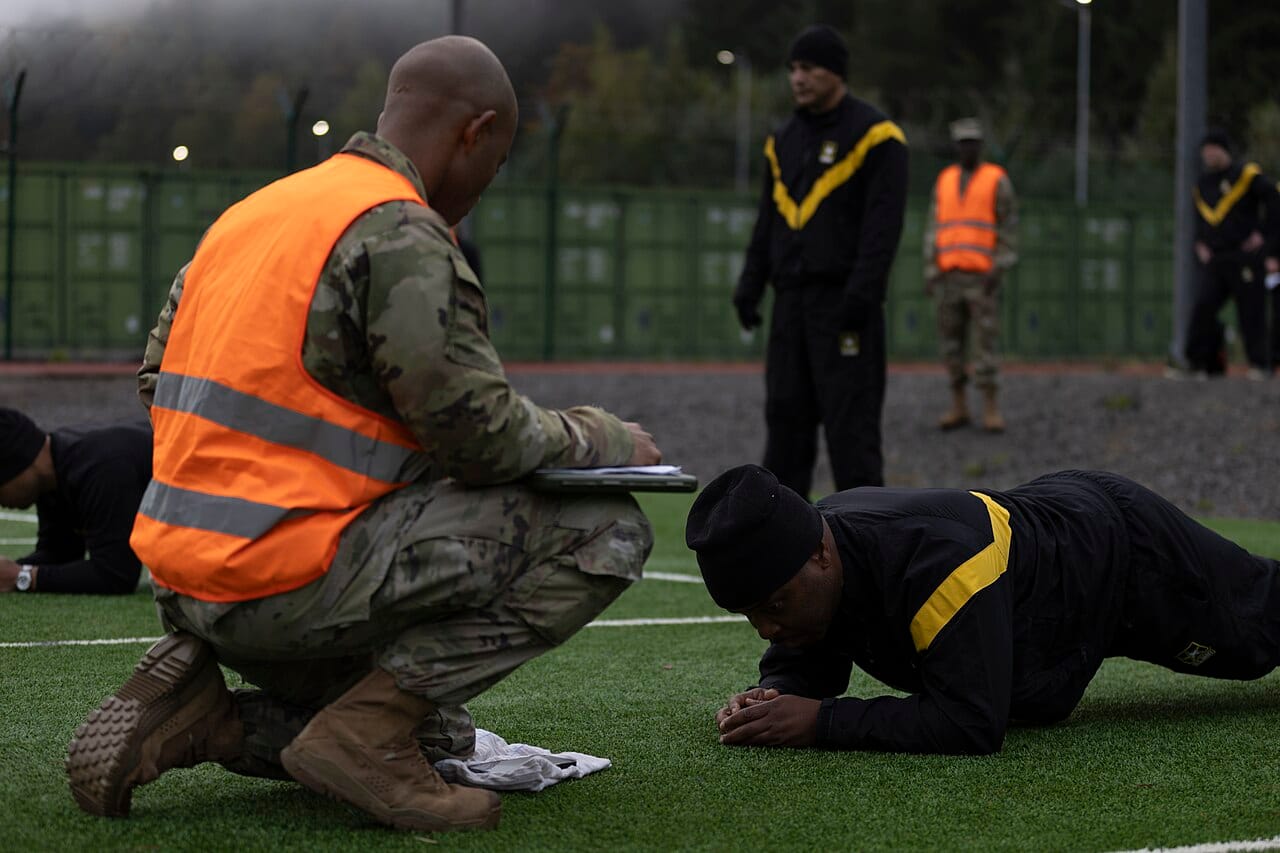
The plank isn't useless, but it's oversold. Holding a plank for 60-120 seconds trains isometric core endurance in one specific position. This matters some — but most sports and lifts don't involve isometric holds of that duration. A 2-minute plank hold doesn't transfer to heavier squats the way people think it does.
The better version: heavy deadlifts, loaded carries, and weighted carries simultaneously provide superior isometric core engagement under realistic loading. Your brace during a 400-pound deadlift produces more core adaptation than 5 minutes of plank variations.
Russian twists and weighted rotation work
These train trunk rotation, which is fine — but most people do them with terrible form (rotating through the lower back rather than the thoracic spine, which is the healthy rotating segment). You're essentially training your lumbar discs to absorb rotational force. This is exactly the kind of loading associated with lower back injuries in the research literature.
If you want rotation training, do it from cable machines with full control, or do single-arm loaded carries (suitcase carries) which train anti-rotation — resisting the pull of the asymmetric load. Anti-rotation beats active rotation for core training.
What actually works
Weighted hanging leg raises
The hanging leg raise done strictly — no swinging, no momentum, hips stable, legs lifted with pure abdominal contraction — is the best direct ab movement that exists. Done bodyweight, it builds strength through a large range of motion. Done with a dumbbell between your feet (start with 5-10 pounds), it becomes a progressive strength exercise for your abs.
Sets and reps: 3 sets of 8-12 reps. Progress the weight as you progress any other lift. If you can't do 5 hanging leg raises, start with knee raises and work up.
The key: control the tempo. Lower in 3-4 seconds. The negative phase is where most of the adaptation happens.
Cable crunches
On a cable stack, kneeling with the rope attachment behind your head, flex your spine against the weight. This is a loaded crunch that scales infinitely. Start at 60-80 pounds, work up to 100+ pounds over months. The crunch position should emphasize rounding the upper back, not pulling with the arms.
Why this works when bodyweight crunches don't: load. Your abs respond to progressive overload just like your chest and back. Bodyweight crunches cap out; cable crunches scale.
Sets and reps: 3 sets of 10-15 reps with a weight that challenges you in the last few reps.
Heavy loaded carries
Farmer's walks (both arms loaded), suitcase carries (one arm loaded, anti-rotation), and overhead carries (one or both arms overhead) are the most functionally useful core exercises available. They train bracing, grip, traps, shoulder stability, and abs simultaneously, all under significant load.
For abs specifically, suitcase carries and overhead carries produce the most direct effect. Carrying 80+ pounds in one hand for 40 yards forces your obliques and lateral core muscles to brace against the pull. Heavy overhead carries force your abs to stabilize while the load is overhead.
Programming: 3-5 sets of 30-40 yards, 2-3 times per week, at the end of training sessions.
What this looks like weekly
A solid core routine for a lifter looks like this:
- Day 1 (squat day): Heavy hanging leg raises, 3x8-10 weighted
- Day 2 (bench day): Cable crunches, 3x12 heavy; suitcase carry, 3x40 yards per side
- Day 3 (deadlift day): Farmer's walks, 3x40 yards heavy
Total weekly time spent on direct ab work: about 20 minutes. Compare to 40-60 minutes of crunches, planks, and Russian twists that produces less.
The visibility question
Most people train abs because they want visible abs. Abs are visible at 10-12 percent body fat for men, 18-20 percent for women. Below those numbers, the muscles already built will show. Above those numbers, more ab training doesn't help — the fat layer obscures what's there.
If your abs aren't visible, you need to lose body fat, not do more crunches. All the ab exercises in the world won't give you visible abs if you're 20 percent body fat.
Ab training is for strength (which supports every other lift in the gym) and for visible thickness (which shows up when you're lean). Not for spot-reducing belly fat, which doesn't work.
The underrated benefit: brace quality
The most important benefit of heavy ab training isn't visibility or six-pack development. It's brace quality.
A strong, well-trained core improves every compound lift you do. Your squat gets more stable. Your deadlift becomes safer. Your overhead press has a rock-solid base. Your bench press generates more force because you're not leaking energy through a loose midsection.
Lifters who transition from "bodyweight plank and crunches" to weighted hanging leg raises, cable crunches, and heavy carries often report their main lifts going up by 20-40 pounds over 3-6 months with no changes to their programming except better core work. The bracing capacity translates directly.
That's the real payoff. Not visible abs. Better lifts across the board.