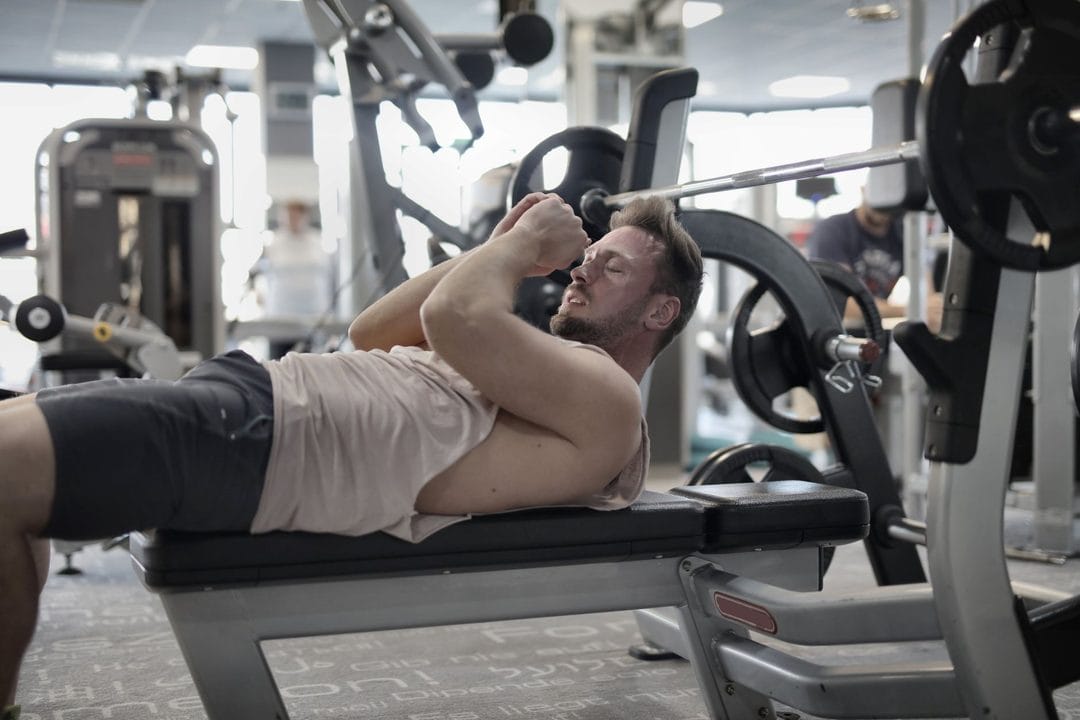
Walk into any gym and you'll see the same thing: a man finishes a hard set, then immediately reaches for his phone. Three minutes later he's still scrolling, vaguely aware he should probably do another set. The rest period — the bit between sets that nobody programmes and everybody guesses at — is quietly deciding how much you get out of every session. Get it right and the same workout builds more muscle and more strength. Get it wrong and you're either short-changing yourself or padding an hour-long session into ninety minutes of standing around.
Why the gap between sets actually matters
When you lift, you drain two things: the chemical fuel in the muscle that powers near-maximal effort, and your central nervous system's readiness to fire hard. Both recover with time. Cut the rest too short and the next set suffers — fewer reps, sloppier form, less weight moved. Over a whole session that adds up to meaningfully less total work, and total work over weeks is what drives results.
The old gym-bro idea that short rest “burns more” and builds more muscle has largely been turned on its head. For building size and strength, longer rests usually win because they let you do more quality work per set. The burn feels productive. It mostly just feels.
Match the rest to the goal
Heavy strength work: 3 to 5 minutes
For your big compound lifts in low rep ranges — squats, deadlifts, bench, overhead press at heavy loads — you want full recovery. That means three to five minutes between sets, sometimes more on a top set. It feels like forever. It's the difference between hitting your numbers and grinding out ugly reps that teach your body bad patterns.
If you're training for raw strength, don't apologise for resting. The set is the work; the rest is what makes the next set possible.
Building muscle: 1.5 to 3 minutes
For the meat of a hypertrophy session — moderate reps, the work that builds size — somewhere between ninety seconds and three minutes is the sweet spot. Enough to recover most of your strength, not so long the session balloons. A good rule: rest until your breathing is back to normal and you genuinely feel ready, then go.
Smaller isolation work: 60 to 90 seconds
Curls, lateral raises, calf work, face pulls — these don't tax your whole system, so they recover fast. A minute to ninety seconds is plenty. This is where you can tighten things up and keep the session moving.
How to actually time it (because guessing fails)
The honest problem is that “rest until ready” turns into four minutes of YouTube without you noticing. The fix is boring and it works: use a timer. Your phone's stopwatch, a cheap interval timer, any of the free gym apps. Start it the second you rack the bar.
- Set a target before the set, not after.
- When the timer hits the number, you start the next set — ready or not, within reason.
- Keep the phone face-down between glances. The scroll is the enemy, not the rest.
Most men discover they were resting far longer than they thought on easy lifts and rushing the hard ones. A timer fixes both in a week.
When to bend the rules
Short on time? Pair two exercises that don't compete — a set of rows, then a set of leg curls while your back recovers — and you halve the standing-around without halving the recovery. This works beautifully for isolation and opposing muscle groups. It does not work for two heavy compounds; supersetting squats and deadlifts is a recipe for a bad day.
And if you're sleeping badly or under-eating, everything takes longer to recover. On those days, give yourself the extra minute rather than forcing the clock.
The takeaway
Rest isn't downtime — it's part of the programme. Three to five minutes for heavy strength, one and a half to three for building muscle, a minute or so for the small stuff. Put a timer on it so the number is a decision, not an accident. The set you do next is only as good as the rest before it, and most men are leaving real progress on the table simply because they never thought about the gap.