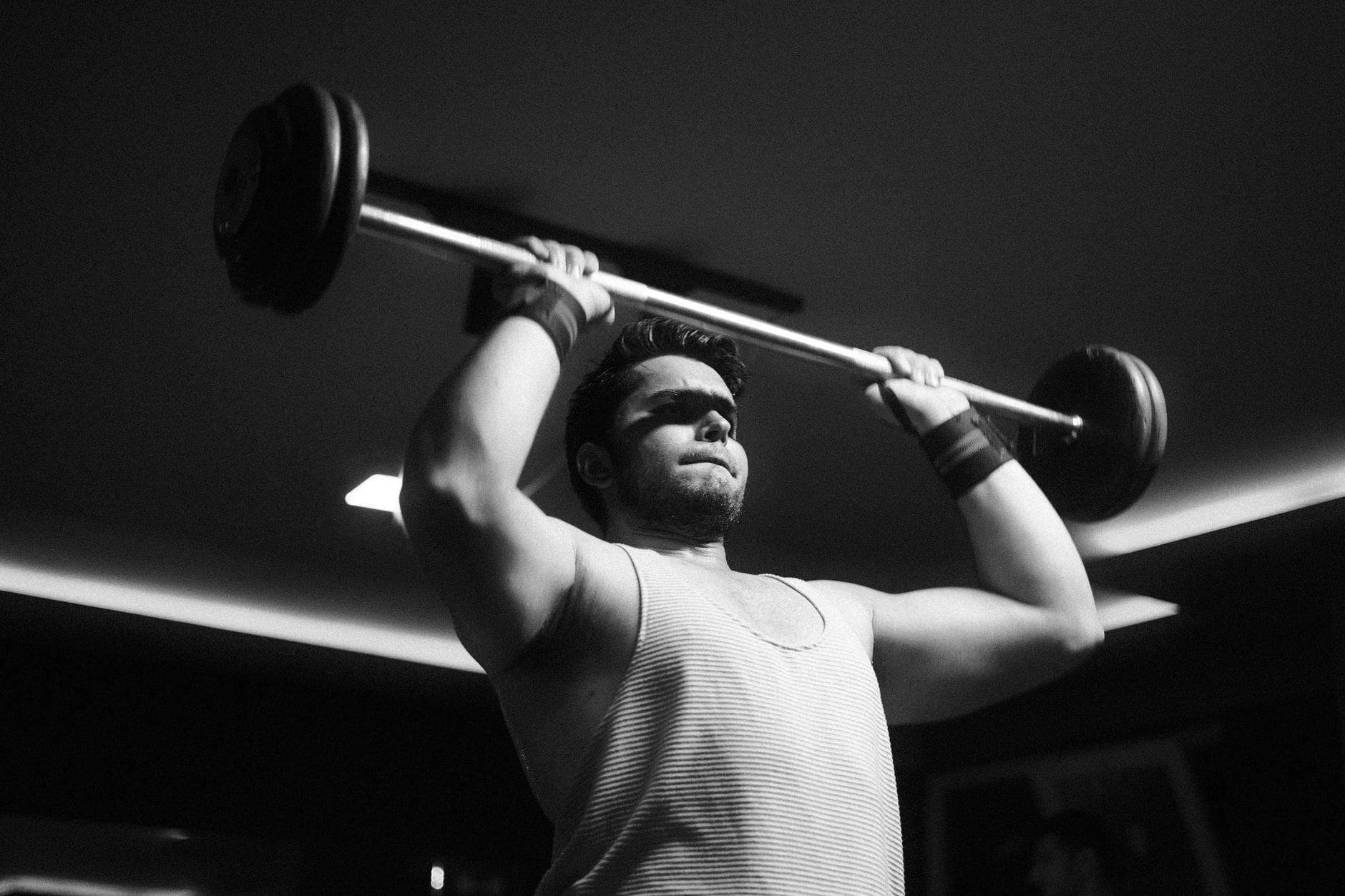
Walk into any commercial gym on a Monday and you'll find every flat bench occupied and the overhead press station gathering dust. That imbalance is exactly why so many men in their late thirties end up with cranky shoulders that click on the bench and ache when they sleep on their side. The bench press builds the front of the shoulder relentlessly; almost nothing in a typical bro split builds the muscles that hold the joint together from behind and above. The standing overhead press does, and for men over 35 it's less of an ego lift and more of an insurance policy.
Why the press matters more as you age
The shoulder is a joint that trades stability for range of motion — it can move in almost any direction, which is precisely why it falls apart when the muscles around it are unbalanced. Years of pressing horizontally and never pressing vertically leaves the front deltoids and pecs strong and tight while the upper back, rear delts, and the stabilisers of the rotator cuff stay weak. The standing barbell or dumbbell press loads the shoulder through a full overhead range under control, and it forces the whole girdle — traps, serratus, upper back — to brace as a unit. That bracing is the thing your shoulders are missing.
There's a strength argument too. Pressing a bar overhead from a standing position is one of the most honest displays of full-body coordination there is — you can't cheat it with a leg drive off a bench. A man who can strict-press his bodyweight overhead at 40 has a level of structural strength that translates to everything from carrying a sofa to not throwing his back out shovelling snow.
The programming that works after 35
The mistake men make is training the press like they're 22 — grinding heavy singles, missing reps, treating it like the bench. After 35 the press responds far better to moderate loads, controlled volume, and frequency than to maximal weight. Here's the framework worth stealing.
- Press twice a week, once "heavy" (sets of 3-5) and once for volume (sets of 6-8). The lighter day does more for the joint than the heavy day does.
- Keep one or two reps in reserve on every set. The strict press is a lift where the last grinding rep gives you almost nothing and costs your shoulder a lot.
- For every overhead pressing set, do roughly two sets of horizontal or vertical pulling — face pulls, rows, pull-ups. The pulling is what keeps the joint balanced; the pressing alone will make the imbalance worse, not better.
- Rotate the implement every six to eight weeks: strict barbell, then dumbbells, then a brief block of the half-kneeling landmine press, which is the gentlest entry point if your shoulders are already grumpy.
The form points that protect the joint
Most shoulder pain from pressing comes from two errors, and both are easy to fix. The first is flaring the elbows out and pressing in a wide arc, which jams the shoulder into impingement at the top. Keep the elbows tucked slightly forward of the bar and press in a straight line, moving your head back out of the way and then forward "through the window" as the bar passes your face. The second is over-arching the lower back to fake a few extra pounds — squeeze the glutes, brace the abs, and keep the ribcage stacked over the pelvis. If you're arching like a banana, the weight is too heavy.
Start every press session with a couple of light sets of band pull-aparts and some controlled overhead reaches. Two minutes of that primes the rotator cuff and the difference in how the first heavy set feels is night and day.
The honest caveat
The overhead press is not for everyone in every state. If you have a genuinely impinged or unstable shoulder right now, loading it overhead can make things worse, not better — that's a case for the landmine press and a physio, not a barbell. And some men simply have shoulder anatomy that doesn't love deep overhead loading; if a strict barbell press hurts no matter how clean your form is, the dumbbell press with a neutral grip lets you find a path that the fixed bar doesn't allow.
But for the large majority of men over 35 whose shoulders ache precisely because they only ever press horizontally, the answer isn't more rotator-cuff rehab on a cable. It's putting a weight over your head twice a week and pulling twice as much as you press. Start with the empty bar this week. Your forty-five-year-old shoulders will thank you.