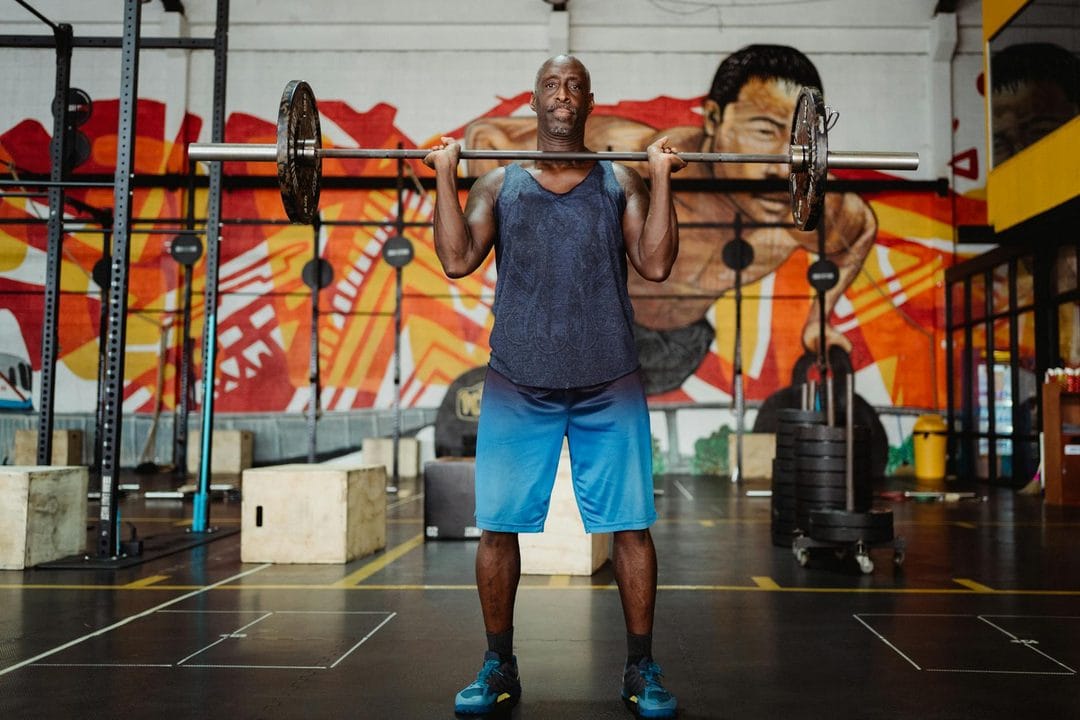
Heat kills more workouts than laziness does
By late May, a lot of men who trained hard through winter and early spring start noticing something odd: the workouts feel harder even though the weights haven't gone up. Recovery feels worse despite eating the same. The intensity that felt sustainable in February produces a kind of flat fatigue that's different from normal post-training tiredness — duller, more systemic, harder to shake by the next morning. The diagnosis is almost always heat, and most men misattribute it to overtraining or inadequate sleep instead.
Exercise in the heat increases cardiac demand independently of muscular demand. Your body diverts blood flow toward skin for cooling, which means less is going to working muscles. At a core temperature around 102°F — achievable in a hot gym after 20 minutes of hard effort — lactate accumulates faster, glycogen depletes faster, and perceived exertion for the same absolute load can increase by 20–30%. This isn't a willpower deficit; it's basic thermoregulatory physiology. Understanding that changes how you program June through August instead of guessing at what's wrong with your training.
Adjust session structure, not just the air conditioning
The most effective adjustment most men resist is shortening sessions. Ninety-minute workouts that worked in March become counterproductive by June if your gym runs above 75°F and you're not air-conditioned for the whole session. Fifty to sixty-five minutes at the same training density — same number of hard sets, same loading, shorter rest periods — is not a downgrade. It's the right adaptation to changed environmental conditions. You're not doing less work; you're cutting the overhead that was padding the session without adding stimulus anyway.
The warmup also changes. A 15-minute warmup in a hot environment isn't building up to working temperature — you're already there. Three sets of progressively loaded warmup work per movement is enough. Extending the warmup in summer heat adds thermal load without adding readiness, and by the time you hit your first work set you've already spent 20% of your useful heat tolerance on the warmup.
Morning training before 8am becomes meaningfully better in summer for anyone who has schedule flexibility. Air temperature is lower, gym occupancy is lower, and you start the session at a lower core temperature. If you've been training at 6pm and wondering why June feels harder than March, the answer is likely that straightforward — try moving the session for two weeks and see what changes.
What to do with hydration (that's not what most guides say)
The standard advice — drink water before, during, and after training — is correct but underspecified in ways that matter. Cold water specifically reduces core temperature more effectively than room-temperature water during exercise, not just psychologically but measurably. The effect is modest — roughly 0.3–0.5°C reduction — but over a 60-minute session that's meaningful. Ice-cold water or a pre-workout cold slushie (studied extensively in Australian Rules football research) drives more pronounced thermoregulatory benefit, roughly 0.8–1.0°C core temperature reduction at the onset of exercise. You don't need a formal slushie protocol; a blender with ice, water, and a squeeze of lemon five minutes before you start the session is sufficient.
Electrolyte replacement matters more in summer, and here's the catch most basic advice misses: sweat rate and sweat sodium concentration vary enormously between individuals. Heavy sweaters who train for 60 minutes can lose 1.5–2 litres of fluid and 1,000–2,000mg of sodium. Replacing water without sodium dilutes serum sodium, which is worse than mild dehydration for most strength-training parameters. LMNT packets (1,000mg sodium, 200mg potassium, 60mg magnesium) added to a 500ml water bottle during a summer session is a practical fix that most men who try it notice immediately in how the second half of the workout feels. SaltStick Fastchews are the alternative if you prefer chewable form during training.
Programming adjustments that actually hold strength through summer
The mistake most men make through summer is trying to maintain the exact same programming structure that built strength from November through April, getting confused when progress stalls, and either grinding through it badly or cutting training frequency entirely. Neither works. The right move is a deliberate summer block that accepts lower absolute volume, defends intensity, and uses the season's constraints productively.
Cut one training day per week if you're currently doing four or five days. Three well-executed 55-minute sessions will retain every pound of strength you've built — the research on minimum effective volume for strength maintenance is fairly settled: as few as one to two hard sets per muscle group per week maintains strength for trained individuals over a 12-week period. You're not maintaining on one set — three to four working sets per movement across three sessions is more than adequate. The lost day creates more recovery buffer, which the added thermal stress genuinely requires.
Keep heavy compound work — squats, deadlifts, bench, row — at or near your current working loads. Don't drop intensity to compensate for heat; drop volume instead. Ten sets of squats at 80% of max in a hot gym is a stress-recovery mismatch. Five sets at the same 80% in the same hot gym is defensible. The nervous system adaptation and muscle tension response that built your strength come from the load, not the volume. Cut volume, protect intensity, and you'll walk back into your full programme in September with your numbers intact.
If your gym has no AC and runs above 85°F by 11am, train before 7am or consider pool sessions or calisthenics outdoors in shaded areas on two of your three weekly sessions. Training through peak heat in a closed gym without AC is a choice that costs more than it returns — not a character-building exercise, just bad programming. Adapt the environment before adapting the programme.