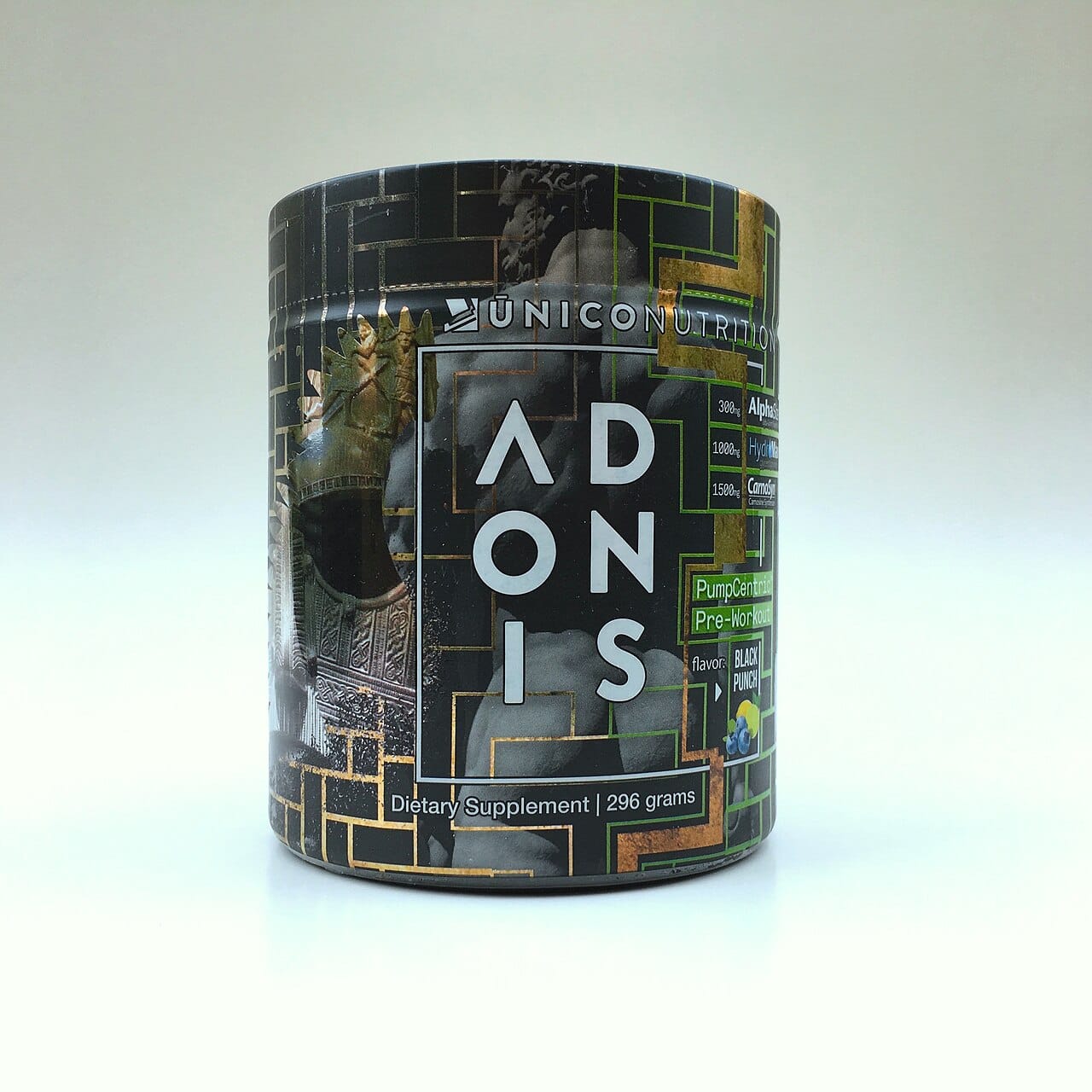
Pre-workout supplements are a $2 billion industry built on cramming as many ingredients as possible into a scoop and marketing the total as synergistic. In reality, three of those ingredients do the performance work — caffeine, creatine, and beta-alanine. The other 10 to 15 in the typical tub are either too lightly dosed to matter, lack evidence, or produce effects the marketing dramatically oversells.
You can build the same performance benefit as any $50 tub for about $15 worth of individual ingredients, and skip the 15 ingredients that add nothing but cost and possibly side effects.
What actually works
Caffeine (200 to 400 mg)
Covered in detail in the previous article. The primary performance driver in every serious pre-workout. Gives a 2 to 5 percent bump in strength, endurance, and focus at the right dose.
In pre-workouts: typically 150 to 350 mg per scoop. Check the label — some tubs are underdosed (100 mg), some are overdosed (400+ mg).
Creatine monohydrate (5 grams)
Timing of creatine doesn't matter much, but pre-workout is as good as any. Saturates muscle stores to produce 8 to 10 percent strength gains over 12 weeks.
In pre-workouts: often underdosed or missing entirely. A 5-gram dose of creatine alone accounts for most of the total tub weight, which is why many pre-workouts include only 2 to 3 grams or skip it. Supplement separately.
Beta-alanine (3.2 to 6.4 grams)
Buffers muscle pH during high-rep sets. Produces measurable improvements in work lasting 60 to 240 seconds — most productive for sets in the 10 to 20+ rep range.
Causes harmless tingling (paresthesia) in the skin, which lifters often mistake for the pre-workout "working." The tingling is from beta-alanine binding to nerve receptors and has nothing to do with performance — the actual performance benefit develops over weeks of daily supplementation.
For pure strength training in the 1-to-8 rep range, beta-alanine has little benefit. Skip it if you're not doing high-rep work.
What doesn't work (or barely works)
Citrulline malate (4 to 8 grams)
Purported to increase nitric oxide and produce muscle pumps. The actual data on performance benefits is mixed. Some studies show small benefits for high-rep work, others show nothing. The pumps are real — it's a vasodilator — but whether pumps translate to hypertrophy is separately debated.
Verdict: might help a little for high-volume training. Low priority in a supplementation hierarchy. If you have it, fine. If you don't, you're not missing much.
Arginine / AAKG
Marketed for nitric oxide boosts. In oral supplement form, poorly absorbed and minimally effective in controlled studies. Citrulline does what arginine is supposed to do, but more effectively. Arginine in pre-workouts is largely marketing filler.
Taurine
Small evidence base for minor endurance improvements at doses around 2 grams. Not harmful, not impressively beneficial. Often included in pre-workouts at sub-therapeutic doses (500 mg).
BCAAs
Branched-chain amino acids (leucine, isoleucine, valine) in supplement form. Marketed as muscle-protective during training. In the presence of adequate dietary protein (which any serious lifter has), BCAA supplementation is redundant.
The 2017 Morton meta-analysis showed BCAAs produce minimal additional hypertrophy benefit over adequate dietary protein. Save the money.
L-theanine
Smooths caffeine's edge, as covered previously. Legitimate pairing, but most pre-workouts underdose it (often 50 mg when 100 to 200 mg is the effective range). Worth supplementing separately if you want the effect.
Tyrosine, alpha-GPC, choline, nootropics
Various brain-function ingredients. Small evidence bases, highly variable individual responses. Marketing far exceeds research support. Low priority for training performance specifically.
What's in a typical pre-workout
Let me break down a popular $50 pre-workout I've looked at:
- Caffeine: 250 mg — legit dose
- Creatine monohydrate: 3 g — underdosed (should be 5 g)
- Beta-alanine: 3.2 g — legit dose
- Citrulline malate: 6 g — legit dose for nitric oxide boost
- L-arginine: 1.5 g — redundant with citrulline, skip
- Taurine: 1 g — underdosed
- L-tyrosine: 500 mg — underdosed for cognitive effects
- L-theanine: 100 mg — legit dose
- AAKG: 1 g — redundant
- Beetroot extract: 500 mg — insufficient for nitric oxide benefit
- Siberian ginseng: 300 mg — weak evidence
- Huperzine A: 50 mcg — nootropic, weak evidence
- Black pepper extract: 5 mg — absorption enhancer, marginal benefit
Of those 13 ingredients: 3 are dosed effectively (caffeine, beta-alanine, citrulline). 10 are underdosed, redundant, or lack sufficient evidence. You're paying $50 for effectively 3 active ingredients, plus 10 ingredients designed to fill out the label.
The DIY alternative
Build your own pre-workout for under $15 a month:
- Caffeine tablets (200 mg each): $10 for 100 tablets = 100 training days at ~$0.10 per use
- Creatine monohydrate (5 g per serving): $30 for 500g = 100 days at $0.30 per use
- Beta-alanine (optional, for high-rep work): $15 for 500g = 150 days at $0.10 per use
- Citrulline malate (optional, for pumps): $25 for 500g = 100 days at $0.25 per use
Total for all four: roughly $0.75 per training day, or $22 per month. Compare to $50 per month for a commercial pre-workout that contains the same active ingredients at worse doses.
The simplest protocol
If you want just one pre-workout action, take:
- 200 mg caffeine, 45 minutes before training
- 5 g creatine monohydrate, any time (pre-workout is fine)
This two-ingredient stack costs $0.40 per day, captures 90 percent of the performance benefit of any commercial pre-workout, and has the strongest evidence base in sports nutrition.
The marketing problem
Pre-workout marketing relies on three tactics:
- Proprietary blends: listing ingredients in a blend without disclosing individual doses. Often means key ingredients are underdosed.
- Sensory feedback: beta-alanine tingles, stimulants create an obvious stimulant feeling. These "working" sensations don't necessarily correlate with performance improvement.
- Ingredient count: 15 ingredients sounds more effective than 3. In reality, 3 well-dosed ingredients outperform 15 poorly-dosed ones.
Marketing drives sales. Evidence should drive your purchases.
When pre-workouts are worth buying
Commercial pre-workouts do have advantages:
- Convenience (one scoop vs 3 separate supplements)
- Taste and ritual (some lifters genuinely like the pre-workout taste experience)
- The placebo effect is real — if you believe it works, you'll train harder
If you value the convenience and ritual, buy one. Pick brands with transparent labeling (no proprietary blends) and ingredients dosed at research-supported levels. Transparent Labs and Jacked Factory are among the better options.
The honest recommendation
If you want performance, supplement caffeine and creatine separately. Add beta-alanine if you do high-rep work. Skip everything else.
If you want the experience, buy a transparent-labeled pre-workout and accept that you're paying a premium for taste and convenience. Just know that the 15 ingredients aren't doing 15 things — three of them are doing the work.