Louie Simmons built Westside Barbell into one of the most successful powerlifting gyms in history partly on the back of the box squat. Every serious lifter who trained there ran them. Multiple world record holders in every weight class used box squats as a primary training lift. There's a reason for this — and it's not just that Westside had a preference. The box squat teaches the squat pattern in ways that free squatting can't.
If you've never done box squats, they probably feel awkward the first few sessions. That's normal. What they're teaching you — true depth, hip break, explosive concentric drive — are things your free squat is probably cheating at without you knowing it. Eight weeks of box squat programming often fixes free-squat technique problems that cues and drills couldn't touch.
What a box squat actually is
A box squat is a back squat performed onto a physical box or bench at parallel depth (hip crease at or below knee height). You squat down, sit fully on the box, pause briefly, then drive up explosively.
Key technique differences from free squat:
- Sit back aggressively — the hips travel back, not straight down
- Tibia becomes vertical or slightly beyond vertical (shins not angled forward like in a free squat)
- Full sit on the box — not a touch-and-go
- Brief pause to remove the stretch reflex
- Explosive drive up from dead stop
The setup looks different from a free squat. If you're doing box squats that look exactly like your free squats with a box underneath, you're doing them wrong.
What box squats teach
1. True depth
Sitting on a box at parallel removes any question about depth. You either hit the box or you don't. Free squats are notorious for depth drift — lifters gradually hit higher and higher parallel over months without noticing. Box squats reset this.
Set the box at an exact height (typically 13 to 15 inches for a lifter of average build, depending on leg length). Every rep hits that height. Depth becomes calibrated.
2. Hip-back mechanics
The box forces a backward hip travel. You can't squat straight down onto a box — you have to sit back. This trains the hip hinge component of a squat that many lifters under-develop.
For lifters who "quad-dominate" their squats (knees travel way forward, hips stay under the bar), box squats retrain the proper posterior-chain contribution.
3. Explosive drive out of the hole
Sitting on the box eliminates the stretch reflex entirely. The concentric drive must come from pure muscular contraction. This trains the exact quality most squats fail on — drive off the bottom.
Over 8 to 12 weeks, box squats typically improve the first 4 to 6 inches of free squat drive by 10 to 20 percent. That's where most squats fail — where box squats specifically improve.
4. Core bracing under load
Sitting onto the box requires maintained bracing through the descent, the pause, and the drive up. No momentum masks core weakness. Your bracing has to hold through the entire movement.
Box height selection
The standard box height places the hip crease at or slightly below knee height at the bottom — a true parallel squat. For a lifter with typical proportions, this is 13 to 16 inches.
Higher boxes (16-20 inches) allow heavier loading but train shallower depths. Useful as specialty work but not as a primary squat substitute.
Lower boxes (below 12 inches) train ATG squat patterns. Very demanding; usually reserved for Olympic lifters or lifters specifically training ATG.
For most general strength lifters, a parallel-depth box is the right starting point. Use a box with enough surface area that you can sit on it fully — typically 16 by 16 inches minimum.
Programming box squats
Three common approaches:
1. Westside dynamic effort day
The original Westside protocol. 8 to 12 sets of 2 to 3 reps at 50 to 65 percent of box squat max, with bands or chains adding accommodating resistance. Focus on speed, not weight. Once per week.
This is a high-volume dynamic day designed to train explosive concentric force production.
2. Box squat as primary squat
Replace back squat with box squat for a block (8 to 12 weeks). Train it at the same intensity you'd train back squat. 4 sets of 3 to 5 at 80 percent.
Good for a block where you want to specifically focus on fixing free-squat problems. When you return to free squat after, the numbers often jump.
3. Box squat as accessory
Main squat stays as free squat. Box squat added once a week as an accessory at moderate weight. 3 sets of 5 at 70 to 75 percent.
Low-risk way to include box squat benefits without abandoning the free squat pattern.
Load expectations
Box squat max typically runs 85 to 95 percent of free squat max. It's not as heavy as free squat because the lack of stretch reflex limits the concentric force. Don't try to match your free squat numbers on box squat — you won't, and trying will lead to failure or bad technique.
At the same time, box squat loading progression proceeds in parallel with free squat loading. A 10-pound bump to free squat typically corresponds to an 8-10 pound bump to box squat.
Common mistakes
1. Using the box as a touch-and-go
Tapping the box briefly and bouncing up isn't box squatting. The pause must be full — a complete sit that removes all stretch reflex. If you're just touching the box, you're doing a depth-limited free squat.
2. Inadequate setup
Box too close to the rack, box too far, box unstable. Spend 60 seconds ensuring the box is exactly where it needs to be, not where it's convenient.
3. Relaxing on the box
Some lifters sit fully and relax their bracing on the box. The pause becomes a rest. Don't let this happen — maintain tension throughout the brief sit, then drive up. Relaxing allows technique to drift.
4. Using a soft box
A stack of aerobics steps or a padded bench compresses under your weight, creating an uneven sit depth. Use a firm wooden box or a concrete platform. The depth needs to be consistent rep-to-rep.
Equipment
Dedicated squat boxes are available at powerlifting gyms and as home gym purchases. Alternatives:
- Plyo boxes (Rogue, Rep): adjustable height, stable
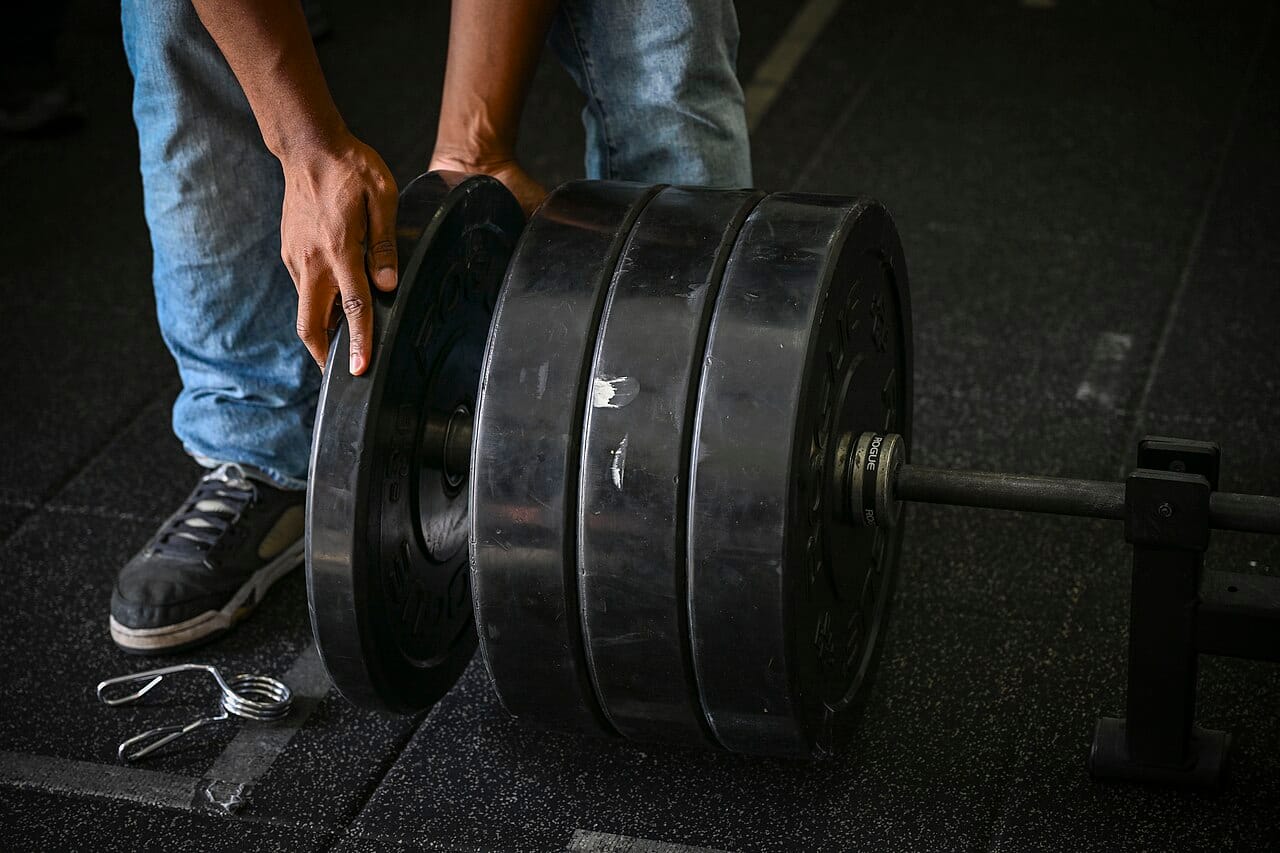
- Bumper plate stacks: use 3 to 4 bumper plates stacked for consistent parallel height
- Concrete or wooden platform boxes: commercial gyms often have these
Avoid: exercise benches (too narrow, unstable), aerobics steps (too low and too soft), folding furniture (varies in stability and compression).
When box squats aren't the right tool
Box squats are less appropriate for:
- True novices still learning the squat pattern (the box adds complexity they don't need yet)
- Lifters with current lower back issues (the pause under load stresses the lumbar)
- Olympic lifters whose sport demands the full-ROM squat pattern
- Lifters whose squat numbers are small (box squats really shine above intermediate loads)
Best for: intermediate and advanced general strength and powerlifting lifters, lifters with technical issues in their free squat pattern, lifters wanting to train out of the hole specifically.
The Westside insight
Louie Simmons' insight was that the stretch reflex masks real weaknesses. Lifters get used to relying on the bounce out of the hole, never develop the pure concentric strength that would make them stronger at the bottom, and hit plateaus they can't understand.
Box squats remove the mask. Train them for a block and your free squat builds stronger bottom-position drive. That's the mechanism Westside exploited for decades.
You don't need to become a Westside-style lifter to benefit. Program box squats for a 12-week block. See what happens to your free squat numbers at the end. The answer usually convinces people to keep them around.