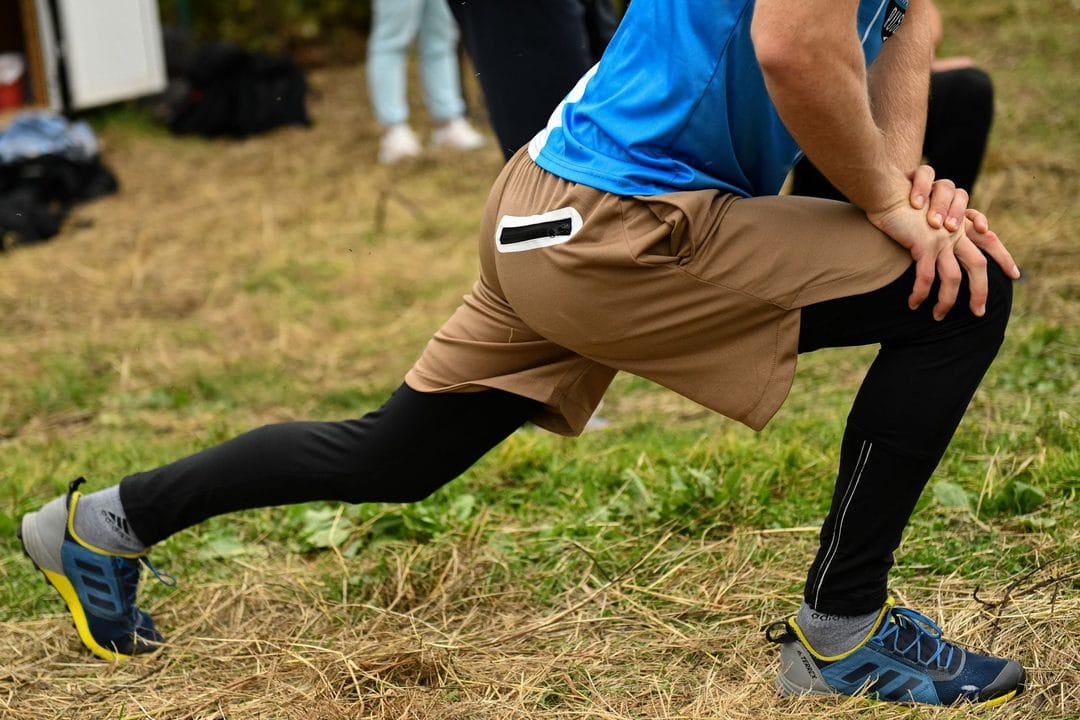
The first properly cold Saturday in November has a way of exposing the lifter who warms up on autopilot. The bar that moved well in September feels heavier, the first squat wobbles at the bottom, and a knee that never complained all summer starts to ache by the third set. Most men read this as a motivation problem, or as proof that the summer layoff cost them more than they thought. It is usually neither. The body simply started the session colder than the programme assumed, and the warm-up was built for a heated gym that no longer matches the room you are standing in.
The clocks went back on Sunday 25 October, so most after-work sessions now begin in darkness. That shift matters more than it sounds. Plenty of men train straight after the office, walk from a cold car park into a hall that only feels warm once the squat rack is loaded, and then start with a rower that was set up for a different season. Your muscles have spent the whole commute losing heat rather than gaining it. You are asking them to produce near-maximal force before they have caught up, and the joints often feel that first.
Why Cold Muscles Behave Differently
Muscle is a temperature-sensitive tissue, and the difference between a cold one and a warm one shows up in how it contracts. When the tissue is cold, the chemical reactions that produce force run more slowly, and the nervous system is less quick to recruit the fast fibres you need for a sharp first rep. Stiff connective tissue also resists stretch more, so the tendons and fascia around the knee and hip take a bigger share of the load at the bottom of a squat. Nothing about this is dramatic on a single set, which is exactly why it gets ignored. It becomes a problem when a cold muscle is asked for a near-maximal effort in the first two minutes of the session. The practical lesson is that your first few sets are not a warm-up for the heavy work; they are the warm-up, and they should be treated that way.
Blood flow changes with temperature too. A cooler body narrows the vessels in the hands and feet to hold core heat, which is part of why fingers go numb first on a winter walk. That makes the hands a practical concern, not just the legs. It also means a bar that slips in your grip on the first rep is a bigger risk than most men expect.
The Indoor Warm-Up Most Men Skip
Plenty of lifters treat a warm-up as five minutes on the rower and a couple of light sets of the first exercise. That routine works in a heated gym in July. In November it leaves the hips, ankles and shoulders in roughly the state they were in when you walked through the door, then asks them to take load straight away. A better approach has three stages, and each stage has one job. The first raises body temperature. The second moves the joints through the ranges the session will use. The third primes the nervous system for speed before the working weight goes on the bar. Here is the version I would use before a heavy squat or deadlift session in a cold gym.
- Stage one: five to eight minutes on a bike, rower or treadmill at a pace where you can still hold a conversation, until a light sweat starts.
- Stage two: two rounds of controlled hip openers, ankle rocks and band pull-aparts, followed by the exact movement pattern of your first lift done with an empty bar.
- Stage three: three or four ramp-up sets of the first lift, climbing towards the working weight, with the last ramp set at two or three reps. Stop there.
Some coaches will tell you static stretching is pointless before lifting. The evidence for long static holds is mixed, and nobody needs to sit in a hamstring stretch for a full minute before a bench press. What helps in the cold is movement through the range you intend to load, slow enough to feel the joint and not so fast that it turns into bouncing. Treat it as a rehearsal rather than a stretch, and the session tends to start feeling like yours within two sets.
Outdoor Sessions Need a Different Start
If you train in a park, run before a session, or go for a ruck through the local woods, the warm-up has an extra problem. Your body loses heat faster while you stand around than it can make up for, and that is the moment most men pull on a hoodie and check their phone. Stay mobile for the first ten minutes and keep moving, even if it is only a gentle walk on the spot. Wear a thermal base layer under your training top, since a plain cotton tee holds sweat against the skin and turns cold the moment you rest. Plan to take off the outer layer once you are working, because a waterproof jacket traps heat and makes the first set feel sluggish. You want to start the first set warm, not hot. The base layer matters more than any stretch routine you can find online.
Keep your hands warm too. Cold fingers lose grip faster than most men expect, and a bar that slips on the first rep is a far bigger problem than a slightly stiff hip. Gloves dull the feel of the bar, so take them off for the working sets and warm your hands between sets with a hot drink or the inside of your jacket.
A Worked Example for a Cold Squat Day
Take a lifter whose working squat is 100 kg for five reps, arriving at a cold gym at half six in the evening. He starts with six minutes on the bike, then rocks his ankles, opens his hips in a slow lunge, and runs two rounds of goblet squats with a light dumbbell. Next comes the empty bar, then ramp sets at roughly 40, 60, 75 and 90 kg, each with the bar moving a little faster and the last one stopped at two or three reps. Only then does he load the 100 kg working set, which by now feels like work rather than a test. The whole thing takes about twenty-five minutes, and the difference shows in the first rep, which moves cleanly instead of grinding.
Compare that with the usual approach: five minutes on the rower, then straight to 100 kg for five because the working weight is already on the bar. The first rep may feel acceptable, but the bottom of the squat is where a cold hip and ankle show themselves, and that is where a stumble or a sharp twinge tends to happen. Nobody needs to make the warm-up longer than the session itself. What the cold changes is the order and pace of the early work, not the time you have set aside for the whole hour.
Mistakes That Waste the Warm-Up
Most failed warm-ups come down to a few habits, and each one looks minor on its own.
- Warming up in a heated car, then standing in the cold for ten minutes before the first set.
- Doing mobility work on a cold floor where the hips never really loosen.
- Chasing a personal record in the first cold session of the season, which is a poor time to test a maximum.
- You feel fine on the way in, so the ramp sets get cut short.
Those are the common ones, though not the only ones. Together they explain why a lifter who trained hard in September can feel slow in November without changing a single variable in the programme.
When the Warm-Up Becomes Too Much
Your first working set should feel almost too easy.
There is a limit to all of this, and it is easy to overshoot. A thorough warm-up followed by twenty minutes standing in a cold car park undoes most of the benefit, so keep the gap between your last ramp set and your first working set short. Some men also overdo it in a heated gym, arrive at the heavy sets sweating and flat, and then wonder why the numbers dropped. A warm-up should leave you ready, not spent. If your last ramp set already feels hard, you have done too much.
Building the Habit Before December
Start with the indoor version this week and write down how the first working set feels compared with last month. If your knees, hips or shoulders feel better inside ten minutes, keep the routine. If they still feel stiff after a fortnight, look at the training volume you did over the summer as well as the temperature, because the two often overlap. Log the warm-up time as well as the working weights, so you can see whether the routine changes anything or only feels like it does. The first thing to watch is the bottom of the squat, where cold joints tend to show themselves. The whole routine fits inside half an hour, and it does more for the first working set than any playlist you could pick.