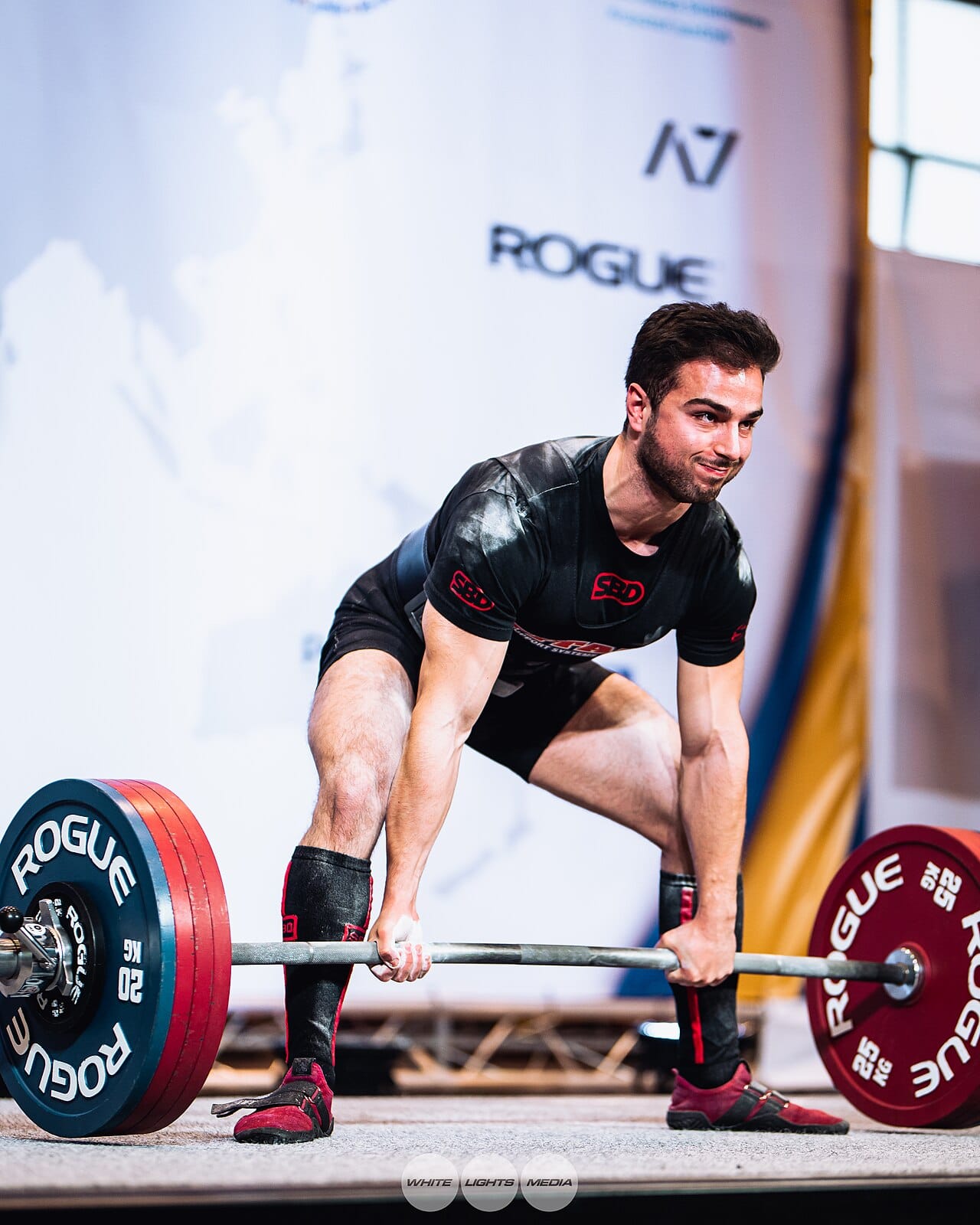
I pulled 405 for a single in 2014 with a back that looked like a question mark. The lift counted, the meet officials gave me the white lights, and I spent the next four months in physical therapy fixing a low-grade hamstring strain that should never have happened. The deadlift is forgiving until it isn't, and the technical errors that hold men back at intermediate levels are almost always the same handful of patterns. None of them require a year of remediation. Most can be fixed in a single training week if you know what you're looking for.
What follows is the checklist I now run with anyone who tells me their deadlift has stalled in the 315 to 455 range, which is where the majority of recreational lifters live. The fixes are concrete, the cues are simple, and the loads come back up faster than most men expect. The hard part is honesty about which error is yours.
The Setup Is the Lift
Most failed deadlifts are decided before the bar leaves the floor. The bar must start over the middle of the foot, not over the toes, and not against the shins. The middle-of-foot reference is the bar's vertical centerline, which sits roughly an inch from the shin when you set up correctly. If you can see the entire bar in front of your shoelaces from above, the bar is too far forward, and you will pull it backward into your shins on the way up, costing both bar speed and skin.
Stance width matters less than men think, but stance angle matters more. Toes should point out 10 to 30 degrees, not straight ahead. Straight-ahead toes lock the hips into a position that limits how close the bar can sit to the body, and almost no recreational lifter has the hip mobility to deadlift heavy with parallel feet. Try 15 degrees of toe-out as a starting point and adjust by feel.
The Hip Position Question
The hip height debate exhausts the lifting internet. The honest answer is that there is a correct hip height for your specific anthropometry, and it is not the same as anyone else's. Long femurs and a short torso favor higher hips and more forward lean, similar to a Romanian deadlift starting position. Short femurs and a long torso allow lower hips and a more upright torso, closer to a sumo squat.
The test is whether your shoulders sit slightly in front of the bar at setup, with your shins close to vertical or barely forward of vertical. If your shoulders are behind the bar, your hips are too low, and the lift will turn into a squat with predictable lumbar problems. If your shoulders are far forward of the bar with locked-out arms, your hips are too high, and the lift will become a stiff-leg pull with predictable hamstring problems.
Lat Engagement Is the Cue Most Men Miss
The most common technical error in the 315 to 455 range is failing to engage the lats before the bar leaves the floor. Without active lats, the bar drifts forward as it passes the knees, the back rounds, and either the lift fails or completes with thoracic flexion that strains the spine.
The fix is a single setup cue: protect your armpits. Imagine someone is going to tickle you, and you're trying to pull your elbows down to defend yourself. That action engages the lats and pulls the bar tight against your body throughout the lift. The cue takes about two sessions to internalize. Once it lives in your setup, the bar path straightens almost automatically.
The Pull Itself
The first six inches of the deadlift should feel slow, deliberate, and tight. Men who jerk the bar off the floor lose tension in the lats, mid-back, and core, and pay for it at the knees and lockout. The mental cue is "push the floor away," not "pull the bar up." That subtle reframe shifts the initial drive into the legs and away from the lower back.
Once the bar passes the knees, the action shifts from leg drive to hip extension. The mistake here is bending backward at the top, which the lift does not require and which annoys judges in any tested federation. Squeeze the glutes hard, stand fully erect, and stop. Bar should sit against the upper thigh, shoulders neutral, knees locked but not hyperextended.
Three Drills That Fix Most Things
The Pause Deadlift
Deadlift to a position one inch off the floor, hold for two seconds, then continue the lift. The pause forces full-body tension and exposes any setup flaw. Use 60 percent of your one-rep max for sets of 3 to 5 reps. Two weeks of pause work changes how a normal deadlift feels off the floor.
The Snatch-Grip Deadlift
Deadlift with a wide grip, fingers near the plates. The wider grip forces lower hips, more thoracic extension, and harder lat engagement. Use 70 to 75 percent of your conventional max for sets of 3 to 5 reps. The lift exposes weak upper backs and trains them simultaneously.
The Block Pull
Deadlift from blocks or plates that raise the bar one to four inches. Block pulls let you train heavier loads with a less aggressive starting position, helpful for men with mobility limitations who cannot reach the floor in good position. They also overload the lockout, which is where many lifters fail at heavier weights.
The Programming Mistake
Most intermediate lifters deadlift too often and too heavy. The deadlift is more systemically taxing than the squat or bench at equivalent loads. One heavy deadlift session per week, with one accessory pulling session at lower intensity, produces faster long-term progress than two heavy sessions per week. Men who deadlift heavy three days a week eventually injure something, recover, and discover they are no stronger than men who pulled once a week.
Volume per week should sit between 12 and 25 reps above 80 percent of one-rep max for most intermediate lifters. Above that, fatigue accumulates faster than adaptation. Below that, progress stalls. The exact number depends on your recovery, sleep, and conditioning, but the range holds across most reasonable programs.
One Counter-Point
If your deadlift is stalled and you cannot identify a specific technical error from the list above, the problem may not be the deadlift. Stalls in this range often reflect undertrained hamstrings, glutes, or upper back, none of which are loaded enough by the deadlift itself to drive their own progress. A program with substantial Romanian deadlift, glute-ham raise, and barbell row work will frequently raise the deadlift more than direct deadlift practice will.
The Recommendation
Pick the single error from this list that most resembles your pull. Spend two weeks training one deadlift session per week, with the pause deadlift or snatch-grip deadlift as your main lift, focused on the cue that addresses your error. Then test a heavy single. The lift will move differently, and almost always faster, than it did two weeks earlier. Continue running the corrective movement as a primary lift for four to six weeks, then return to conventional pulls. The error you fixed will stay fixed if you keep the cue active in your setup.