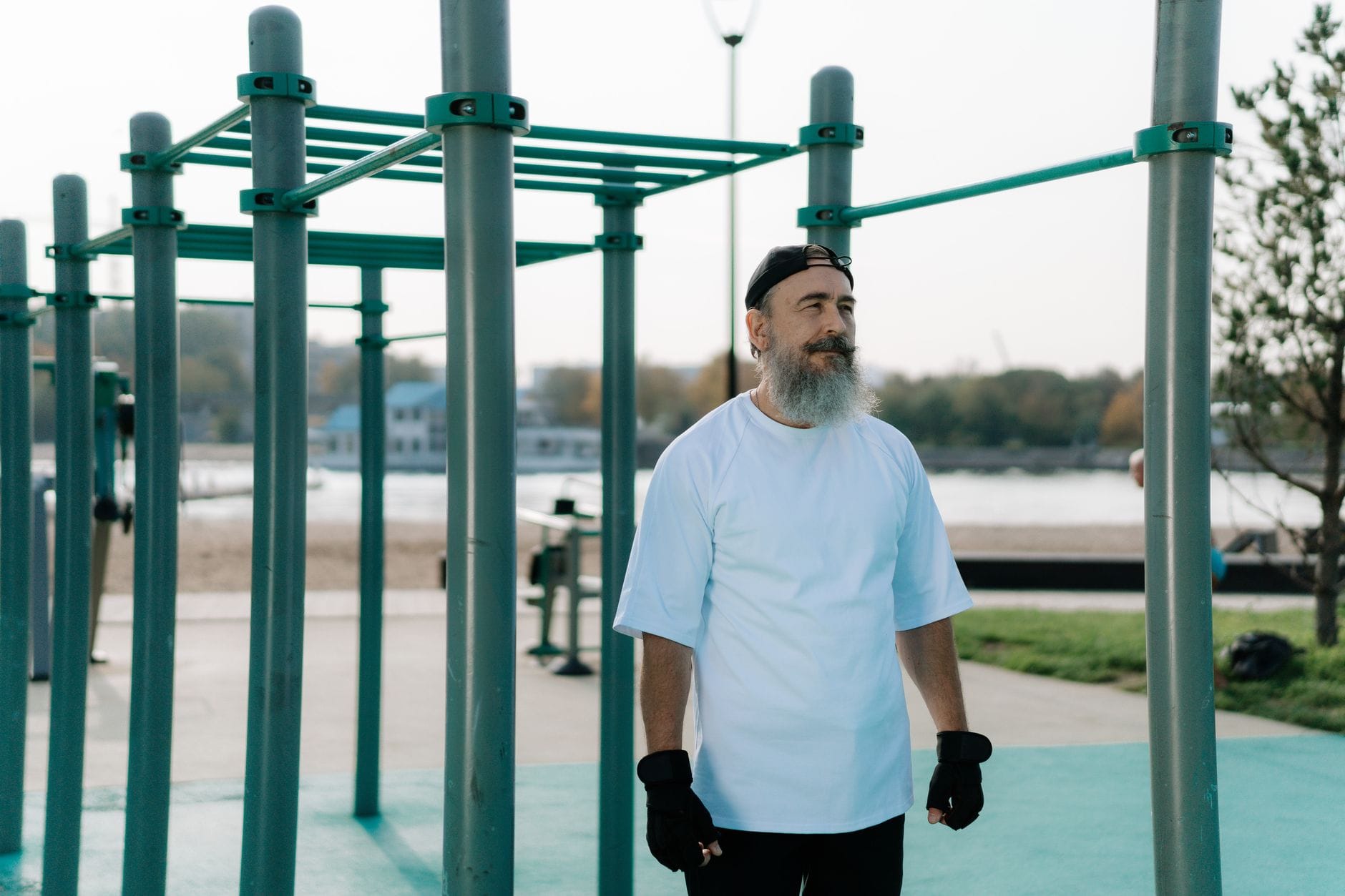
Late May is when most men's training programs quietly start to fall apart. The winter strength block has run its course, the lifts have plateaued, the bench has been at 245 for six weeks. The outdoor running and cycling have started picking up, the deck staining and yard work are eating Saturday mornings, and the structured five-day-a-week barbell programming that ran clean through February now misses Tuesday and Thursday two weeks in three. By the second week of July — when daytime temperatures in most of the US sit between 88 and 96°F and humidity caps the outdoor window at 5:30 a.m. and 7:30 p.m. — the lifter has lost a noticeable amount of conditioning, gained a noticeable amount of fatigue, and has nothing concrete to show for May and June except a slightly browner forearm.
The fix is a six-week hybrid block: a deliberate compression of strength work to three sessions a week, paired with a structured outdoor conditioning schedule that takes advantage of the temperate late-May to mid-June weather window before it closes.
Why the standard five-day program fails in May-June
The five-day upper-lower or push-pull-legs split is designed to maximize hypertrophy in a controlled, indoor environment. It assumes constant recovery conditions, stable sleep, and 60-90 minutes of focused gym time on consecutive days. Spring weather provides none of those — the desire to be outside competes with gym time, the social calendar adds two or three late nights a month, and the body is asked to recover from both lifting and unstructured outdoor exertion. Most men quietly drop sessions, then quietly stop tracking lifts, then quietly enter the summer in worse shape than they started.
The six-week hybrid block — what it actually looks like
Three lifting days, three conditioning days, one full rest day. Lifts are full-body to compress volume; conditioning is outdoor-specific to build heat tolerance for July.
Monday — Lower-body strength
- Back squat: 5 x 5 at 75-82% 1RM
- Romanian deadlift: 4 x 6
- Walking lunges: 3 x 12 per leg
- Cable pull-through: 3 x 12
- Plank holds: 3 x 60 sec
Tuesday — Outdoor zone 2 run
45-60 minutes at conversational pace. Heart rate 130-140 if you have a Garmin or Apple Watch tracking it. This is the heat-acclimation building block — done in late afternoon (5-7 p.m.) to start training the body to handle warmer conditions before the actual heat arrives in July.
Wednesday — Upper-body strength
- Bench press: 5 x 5 at 75-82% 1RM
- Weighted pull-ups: 4 x 6 (or assisted)
- Overhead press: 4 x 8
- Barbell row: 4 x 8
- Dumbbell curl + tricep extension superset: 3 x 12 each
Thursday — Outdoor mixed-modal
30 minutes total. Five rounds of: 400m run, 15 push-ups, 20 air squats, 30 sec rest. The point is intensity, not volume. Outside, in real heat if the day allows.
Friday — Total-body strength
- Deadlift: 4 x 4 at 80-85%
- Front squat: 3 x 6
- Incline dumbbell press: 4 x 8
- Chin-ups: 4 x 8
- Farmer carry: 4 x 40m
Saturday — Long outdoor day
Either 90-minute zone 2 ride, 8-10 mile hike with light pack, or 60-minute trail run depending on terrain access. The point is sustained low-intensity work in real environmental conditions.
Sunday — Rest
Genuine rest. Not active recovery. Sleep in if possible.
The gear that earns its place
- Garmin Forerunner 265 — $449 at REI. Tracks heart-rate zones accurately for the conditioning days. Anyone with an Apple Watch Series 9 or later has equivalent functionality.
- Hoka Clifton 9 trail or Speedgoat 5 — $145-$155 at Running Warehouse. Most lifters underweight outdoor running because the shoes are wrong.
- Goruck Rucker 4.0 with 20 lb plate — $375 for the bag, $65 for the plate. The single most efficient piece of conditioning gear for older lifters because it preserves joints versus running.
- LMNT or Liquid IV electrolytes — $35-$45 per box. Late-May humidity demands more sodium than men assume.
The mistakes that derail it
Treating conditioning days as optional
The lifting days are the ones men show up for. The conditioning days are the ones that build the heat tolerance making July training survivable. Skipping them is the proximate cause of the July collapse most lifters experience year after year.
Going too hard, too fast
Zone 2 means conversational pace. If you cannot hold a conversation, you are not in zone 2. Most lifters get this wrong because their default "easy run" pace is still zone 3-4.
Skipping the deload
Week 4 of the six-week block should drop volume by 30%. Without it the block crashes into fatigue around week 5 and the last weeks salvage nothing.
What to do this week
Pick a Monday start date — Memorial Day Monday or the following Monday work. Set the alarm for Tuesday 6 p.m. zone 2 run. Buy electrolytes before the first hot weekend. Get six weeks of work done before mid-July, and you arrive at the worst of summer with strength preserved, outdoor capacity built, and the option to actually enjoy the July 4 weekend instead of writing it off as a recovery week.