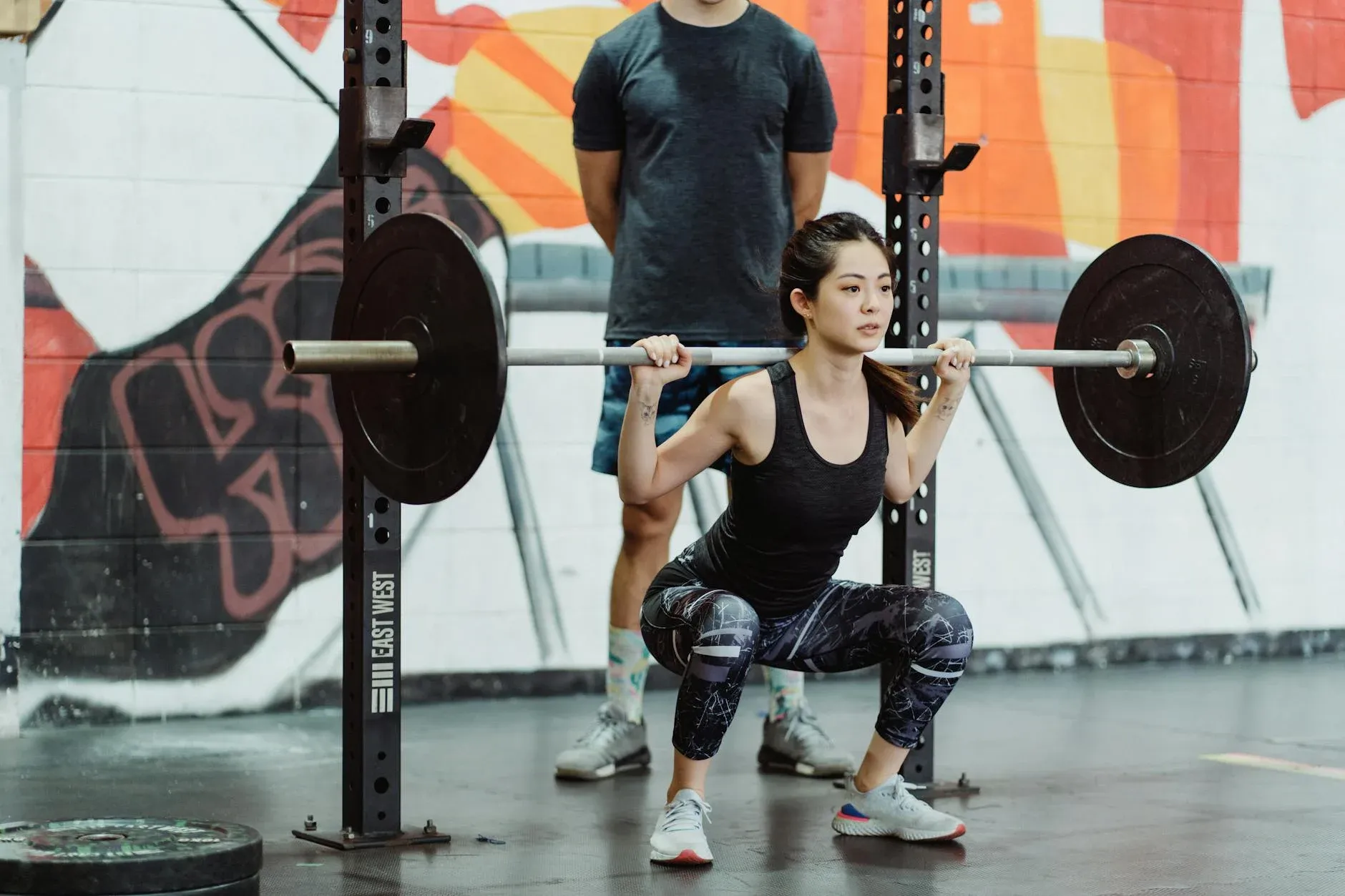
The default squat in most programs is the high-bar back squat. That's fine as a default. It's not automatically correct for you. Your structure, your goals, and your current training phase should drive the variation you're running — and for a lot of lifters, the back squat isn't the right choice for extended periods.
Four squat patterns deserve space in your rotation: back squat (high-bar or low-bar), front squat, goblet squat, and Zercher squat. Each one loads the spine and the hip differently, each one exposes different weaknesses, and each one suits different phases of training.
Back squat (high-bar vs low-bar)
The back squat is the default for good reason — it handles the most raw load of any squat variation, which makes it the highest-stimulus option for overall strength and leg hypertrophy. Beyond that baseline, the bar position matters.
High-bar
Bar sits on the upper traps. Torso stays more vertical through the squat. Quad-dominant loading pattern. This is the Olympic lifter's squat, and it carries over directly to front squats and cleans. At a given weight, high-bar torso angle keeps more of the load on the quads and less on the lower back.
Best for: lifters doing any Olympic work, lifters with lower-back limitations, taller lifters who struggle with low-bar bar placement.
Low-bar
Bar sits on the rear delts / mid-trap shelf. Torso angles forward more, hips pushed back. Posterior chain dominant — more hamstring, glute, and lower back involvement than high-bar. The powerlifter's squat. Handles 5 to 10 percent more load than high-bar for most trained lifters.
Best for: powerlifters, intermediate-plus lifters chasing strength numbers, lifters with limited ankle mobility (the angled torso compensates).
Front squat
Bar sits across the front of the shoulders, elbows high, wrists cocked back. The load line runs through the front of the body, which forces an upright torso throughout the lift. Fail the bracing and the bar either dumps forward or rolls off the shoulders — both of which are harder to fake than a back squat grinding through a forward lean.
Load capacity: typically 70 to 80 percent of your back squat. That's not a downside — the front squat isn't competing with back squat on absolute load. It's training the quads and upper back harder, at a different loading pattern.
What front squats develop
- Upright torso strength — the upper back has to stay rigid against a forward-loaded barbell
- Quad strength — the most quad-dominant of the four squats
- Bracing and breath — you feel every inch of core weakness instantly
- Mobility — ankle, hip, and thoracic extension all get pushed to range
Best for: anyone with a forward-lean tendency in their back squat (fixes it faster than any cue), anyone training for Olympic lifting, lifters rehabbing from lower-back issues.
Goblet squat
A single kettlebell or dumbbell held at chest height. Low load, but the position forces everything the other squats need to work right: upright torso, knees out, deep hip crease, full depth. This is a teaching tool and a warm-up tool, not a primary strength lift.
Load capacity: caps out around 100 pounds for most lifters, because at some point you run out of chest real estate and handle. Beyond that, upgrade to front or back squat.
When to use goblet squats
- Beginners learning the pattern — the best first squat for anyone
- Warm-up before heavy squats — 2 sets of 8 with a 53-pound kettlebell to prime the pattern
- Higher-rep work — 20-rep sets as a conditioning finisher
- Rehab or mobility work when heavy loading isn't in the cards
Don't build a program around goblet squats. Do include them as a tool.
Zercher squat
Bar held in the crook of the elbows, in front of the body, low. Brutal on the biceps, brutal on the upper back, brutal on the core. Not for everyone, and not something you build a program around — but a specialty exercise that shows up in serious strength programs for specific reasons.
What it develops: upper back strength (you have to hold an upright torso against a bar trying to pull you forward), core bracing (front-loaded and low), and raw grinder strength because the position is slow and ugly.
Who should do Zerchers
Intermediate and advanced lifters looking for a variation that hits the upper back in a squat context. Strongmen use them to train stone-lifting mechanics. Powerlifters use them as accessory work to build the front-loaded posture needed for heavy squats.
Not a beginner exercise. Start with a light barbell (95 pounds) and work up to a max triple before you include them in programming.
How to rotate variations
Most programs benefit from one primary squat variation and one secondary. Example rotation for an intermediate lifter:
- Weeks 1 to 6: back squat primary, front squat secondary (once a week)
- Weeks 7 to 12: front squat primary, back squat secondary
- Weeks 13 to 18: back squat primary, goblet squat as warm-up / conditioning
This rotation prevents joint-wear from single-pattern overload and keeps the stimulus varied enough that technical weaknesses get exposed and addressed rather than accumulated.
When to swap the primary
If your back squat is stalling despite good sleep and nutrition, a 6-week front squat focus often restarts progress. The different loading pattern stresses the same muscle groups at different angles, and when you return to back squat, you often find a 20-to-30-pound PR waiting.
If your forward lean on back squat is getting worse, a front squat focus fixes it faster than drilling back squat with cues. The front squat makes a forward lean impossible — the bar dumps. You're forced to fix the pattern.
Picking your squat
You don't need all four variations in every program. You do need at least two — a primary strength squat (back or front) and a secondary / teaching squat (front or goblet). Rotate them across mesocycles. Pay attention to what each exposes in your pattern, and use the feedback to fix the weaknesses rather than compound them.