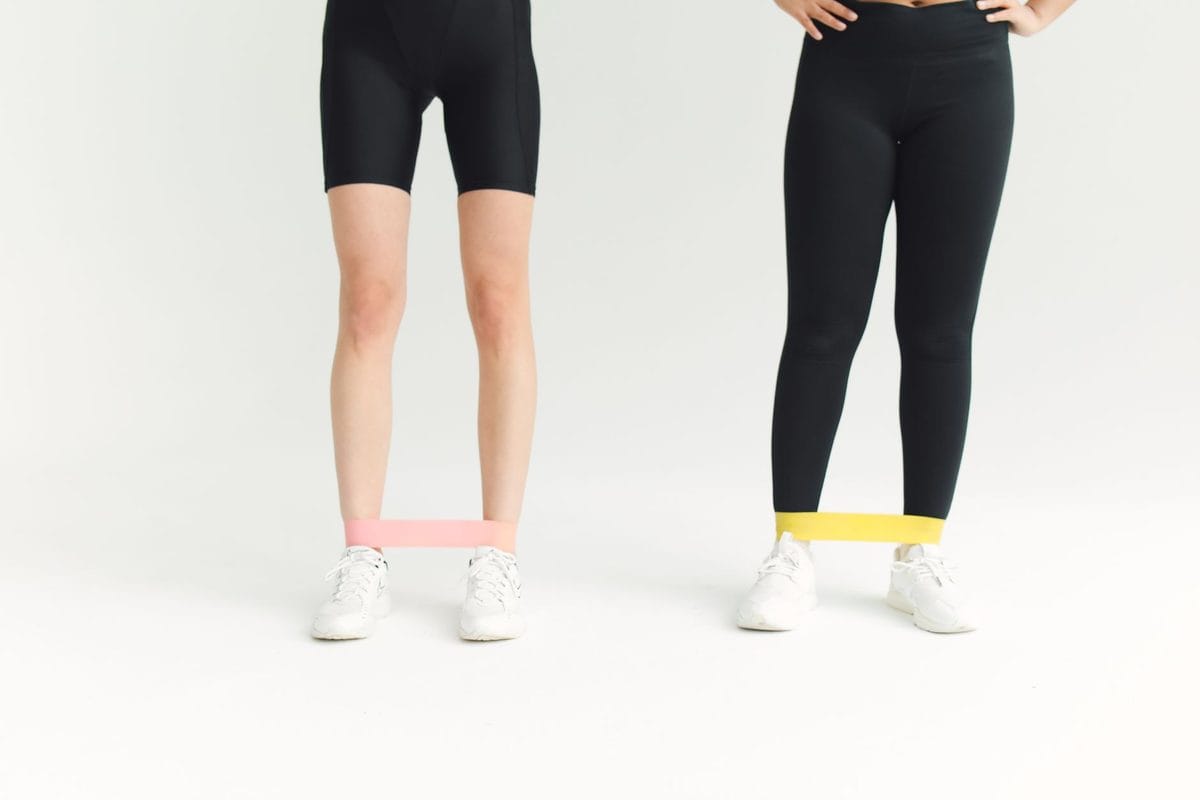
A Pressure Gauge, a Resistance Band, and a Set That Burns Worse Than Anything in Your Normal Program
Wrap a cuff around your thigh, inflate it to a set pressure, load the bar to maybe a quarter of what you'd normally squat or press, and start a set of reps that should feel embarrassingly light. Twenty reps in, your quads are on fire in a way that heavy squats never quite produce. That's blood flow restriction training, or BFR — a method that spent two decades in Japanese physical therapy clinics and post-surgical rehab units before American strength coaches figured out it wasn't just a recovery tool. It's a legitimate way to add muscle when your joints won't tolerate the loads that used to build it.
Where This Came From
The method traces back to a Japanese teenager named Yoshiaki Sato, who in the 1960s noticed his calves swelling and going numb after sitting on his heels for an extended period during a ceremony. He connected the sensation to restricted blood flow and started experimenting on himself with tourniquets and cloth wraps, then spent the 1970s testing variations on bodybuilders. By the 1980s he'd opened a training clinic built around what he called "occlusion training," and in the 1990s he formalized the pneumatic-cuff system now sold under the KAATSU name — a word built from the Japanese "ka" (additional) and "atsu" (pressure). Sato patented the system in the U.S. in the 1990s, and it stayed largely inside physical therapy and Japanese strength circles for another decade before Western exercise scientists started running controlled trials on it.
What the Research Actually Shows
The mechanism isn't the same as a tourniquet cutting off blood entirely. A properly applied BFR cuff allows some arterial inflow into the limb while restricting venous outflow, so blood pools in the working muscle instead of draining away between reps. That pooling forces the muscle to recruit fast-twitch fibers far earlier than it normally would at a light load, and it triggers the same metabolic stress and cell-swelling signals that heavy training produces through a completely different mechanism. Most protocols in the literature run the cuff at 40% to 80% of arterial occlusion pressure, or AOP — the pressure needed to fully stop arterial flow into the limb at rest — with a 2024 systematic review in Frontiers in Physiology pointing to 50%–80% as the sweet spot and flagging that pressures above 80% raise the risk of adverse events without adding benefit. Loads sit at 20% to 30% of your one-rep max, occasionally up to 40%, which is roughly the weight you'd use for a warm-up set, not a working set.
Here's the part that surprises most lifters: at those absurdly light loads, BFR produces muscle growth that's statistically comparable to conventional heavy training. A 2023 meta-analysis published in the same journal, comparing low-load BFR resistance training against high-load resistance training, found overall strength gains still favored heavy lifting by a small margin — but when researchers used incremental, individualized pressure calibrated to each subject's actual AOP rather than a fixed number pulled from a chart, BFR closed that gap almost entirely. Protocols using flat, non-individualized pressure lagged noticeably behind heavy training on strength outcomes, even when hypertrophy came out similar. In other words, the cuff pressure isn't a minor detail you can eyeball — it's the variable that decides whether this works as advertised.
Why This Matters More Once You're Past 35
Heavy axial loading is what built your squat and deadlift numbers in your twenties, and it's still the best tool you have when your joints cooperate. But cartilage doesn't recover the way it did a decade ago, and a lot of lifters over 35 are carrying a cranky knee, an elbow that flares up under heavy pressing, or a lower back that doesn't love grinding through 90% singles anymore. BFR gives you a way to keep training the same muscle groups hard without loading the joint itself anywhere near its limit. Leg extensions at 25% of your max, cuffed above the knee, will torch your quads without putting compressive stress through a patella that's already complaining about squats. That's not a workaround — for a lot of guys, it's the difference between still building quad size at 45 and quietly avoiding leg day because everything hurts the next morning.
If your knees ache after heavy squats or leg press, BFR leg extensions and leg curls belong in your program before you write off lower-body volume entirely. And if you're rehabbing a shoulder or elbow issue that keeps you from pressing heavy, BFR work on the unaffected limb — or light-load BFR on the injured side once a physical therapist clears you — measurably slows the muscle loss that happens during any period of reduced loading.
So Does This Mean You Can Skip Heavy Lifting Altogether?
No — and this is where a lot of guys who discover BFR overcorrect. The strength data is honest about this: heavy, high-load training still produces better raw strength adaptations than BFR does, particularly for multi-joint lifts like the squat and bench where neural drive and tendon stiffness matter as much as muscle size. BFR is a tool for the situations where heavy loading isn't available to you right now — a joint that's inflamed, a recovery week, an accessory exercise you're trying to hammer without adding more spinal loading to an already-heavy week. Treat it as an addition to your heavy work, not a replacement for it, and you'll get the actual benefit instead of a worse version of both approaches.
Setting Up BFR Correctly
Cuff width matters more than most people realize, and it's the detail that gets skipped when someone just grabs a cheap wrap-style band online. A wider cuff inflated to a given pressure displaces more tissue than a narrow one, which means it restricts blood flow at a lower absolute pressure — a pressure setting that's safe on a narrow cuff can be excessive on a wide one. This is why the elastic wrap-and-clip bands sold generically as "BFR bands" for $20–$30 are a gamble: without a gauge showing actual applied pressure, you have no way to know what percentage of AOP you're training at, and you could easily be well past the 80% ceiling the research flags as risky. Purpose-built systems — KAATSU's pneumatic cuffs, B Strong's elastic bands, or a manual sphygmomanometer-style cuff with a real pressure gauge — let you dial in a specific number and repeat it session to session, which is the whole point.
Cuffs go on the upper arm for pressing and pulling work, and high on the thigh, just below the glute, for leg work. Application is limb-specific: you're not going to run BFR on your torso or your back, which limits it mostly to isolation and single-joint accessory movements — leg extensions, leg curls, calf raises, bicep curls, triceps pushdowns, lateral raises. Multi-joint compound lifts under BFR are used in rehab settings under supervision, but for a home or commercial gym setup, stick to the accessory movements where the technique was actually validated.
A Protocol You Can Run This Week
The rep scheme that shows up most consistently in the research is 30-15-15-15 — one set of 30 reps followed by three sets of 15, with 30 to 60 seconds of rest between sets and the cuff staying inflated the entire time. Load sits at 20%–30% of your estimated one-rep max for that exercise, which for most lifters on a leg extension machine means a plate stack that looks almost insultingly light until rep 20 hits. Keep the cuff on for two to three exercises per session, twice a week, targeting the muscle group that's either injured, recovering, or getting neglected because heavy loading isn't an option right now. Fifteen minutes of BFR leg extensions and leg curls, tacked onto the end of an upper-body day, is enough to maintain quad and hamstring size through a period when your knees need heavy squats off the table.
Who Should Skip It
This isn't a technique to improvise. Anyone with a history of blood clots or deep vein thrombosis, uncontrolled high blood pressure, peripheral vascular disease, or any condition affecting circulation should get clearance from a doctor before touching a cuff — restricting venous return in a limb is exactly the kind of stimulus that's contraindicated for those conditions. The same goes for anyone recovering from a recent surgery on the limb in question, beyond what a supervising physical therapist has specifically prescribed. Most healthy lifters tolerate BFR without incident, and the safety literature backs that up when protocols stay inside the 50%–80% AOP range with proper cuff width — but "most healthy lifters" isn't a substitute for actually checking your own risk factors first.
Used correctly, BFR won't replace your heavy squat day, and it isn't trying to. What it does is give you a second lever for building muscle when the first one — heavy load through a healthy joint — isn't available. For a 40-year-old lifter nursing a knee through a training block, that second lever is the difference between six months of accumulated quad atrophy and six months of quads that never noticed the squat rack was off-limits.