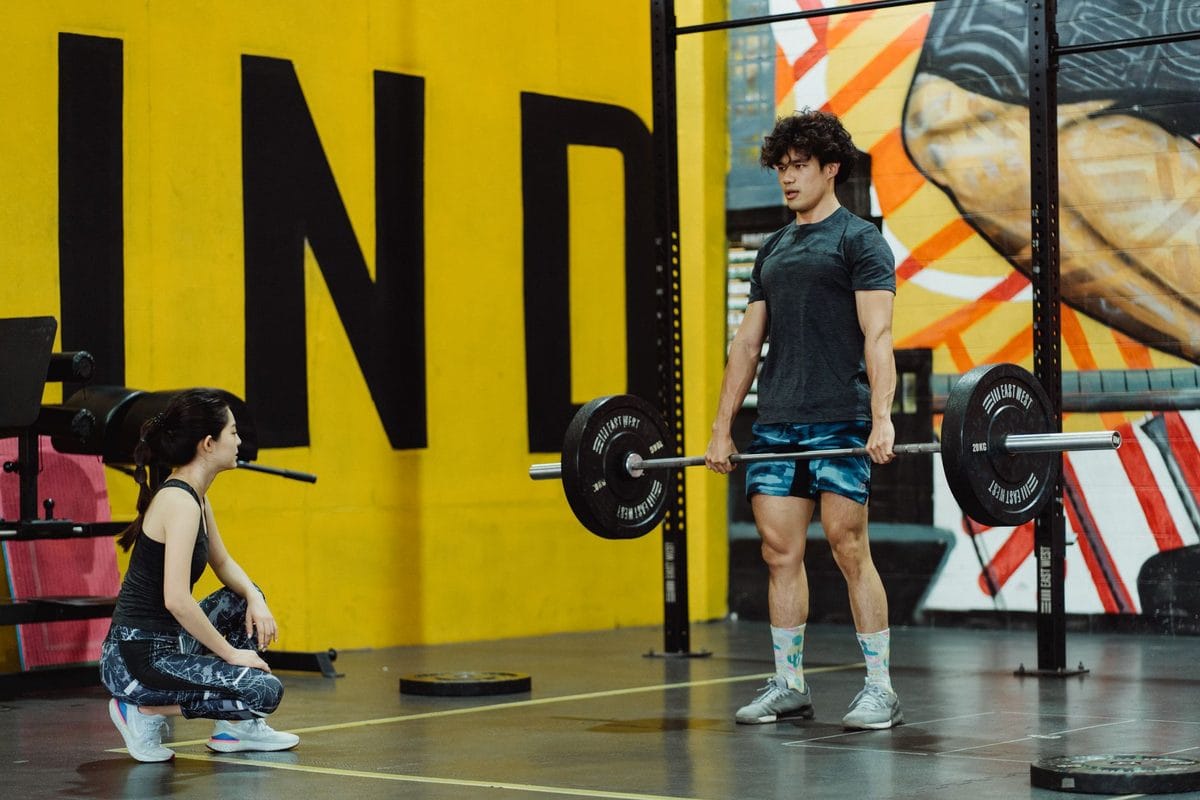
Watch a typical weeknight deadlift session and you will see the same mistake repeated. The hips shoot up first, the bar drifts away from the shins, and the lower back takes the load while the legs sit out the rep. Lifters call that a deadlift. Physios tend to call it a strain in the making. The Romanian deadlift is the lift that fixes the start of the pull, and it is worth learning properly even if you never plan to pull heavy from the floor.
Hinge at the hips, not the knees
The Romanian deadlift, or RDL, begins from standing, not from the floor. You hold the bar at hip height, soften the knees slightly, and push the hips back as if you are closing a car door with your backside. The bar travels down the front of the thighs, close enough to touch the legs throughout. You lower until you feel a strong stretch along the back of the thigh, which for most people happens somewhere between mid-shin and the knee. Then you drive the hips forward to stand up. The knees bend only a little, and that detail is what separates an RDL from a squat variation.
The hamstrings cross two joints, the hip and the knee, so they are stretched most when the hip is flexed and the knee is held nearly straight. That is why the movement is hip-led. A lifter who bends the knees to get lower shifts the work back to the quads and turns the set into a poor squat.
Set the position before the first rep
Most of the lift is decided before the bar moves. Set these points before you start:
- Stand with the bar over the middle of your foot, roughly a hand's width from the shins.
- Take a grip just outside the legs, and keep the arms straight without locking the elbows.
- Brace the trunk hard, pull the shoulders down and back, and keep the chest proud.
- Look a metre or so ahead of you, which keeps the neck in line with the spine.
The bar should not drift forward of the hips at any point. Once it does, you have lost tension, and the lower back carries the weight from there on. Film a set from the side on your phone if you can. The bar path is the fastest feedback you will get, and most people are surprised by how far it drifts.
Load, range and when to stop
Start lighter than your conventional deadlift and use a tempo you can control. A three-second lowering phase is a common starting point, because it forces the hips to hinge rather than fall. Stop the set when the back starts to round, the bar leaves the legs, or the knees bend more with each rep. Those are the signals that the hamstrings have done their job and the next rep is coming from somewhere else.
The honest limitation: an RDL will not fix a pull that starts with the hips rising. If your conventional deadlift breaks at the floor, drill the hinge with a light bar or a broomstick first. Loading the RDL heavy before the position is solid usually produces a rounded back, not faster hamstrings.
Progress the RDL in one of three ways: add a rep to each set until you reach the top of the range, then add load and drop back to the bottom. Slow the lowering phase by a second, or add a two-second pause at the bottom. Any of these changes the stimulus without requiring a heavier bar, which matters for lifters whose lower back is already sensitive to heavy loads.
Where the RDL fits in a week
Put the RDL after your main squat or pull, not before it. Two or three sets of six to ten reps is a common starting range for building the hamstrings, and it leaves enough in the tank to finish the session. If you train legs twice a week, make one session heavier and one a higher-rep tempo version. Many lifters find that the hamstrings fatigue faster than the quads, so give them a full day before the next heavy hinge.
The RDL loads the hamstrings in a lengthened position, which is why many coaches favour it over a seated curl. That is a reasonable argument, but it is not a substitute for progressing the load over time.
Dumbbells and kettlebells, no gym required
You do not need a barbell to learn the pattern. Two dumbbells held at the sides work well, and the bells move the same way a bar does. A single kettlebell held between the legs works too, and it is easy to keep close to the body. Use lighter weights than you would with a barbell, because the grip tends to tire first and the range is often shorter. Keep the back flat and the weight close to the shins throughout, and the movement will feel almost identical to the barbell version.
Common faults and how to fix them
The first fault is the squat in disguise: knees that travel forward as the weight descends, so the movement looks like a shallow squat with a bar in the hands. Fix it by pushing the hips further back and keeping the shins close to vertical, then check the knee angle in a mirror or on video. The second fault is the bar that floats away from the body. Keep it in contact with the legs by letting the fabric of your trousers or shorts brush the thighs. It sounds odd, but it gives you a physical cue that works faster than any verbal one.
The third fault is the one that hurts: a rounded lower back under load. If the back rounds, reduce the range, not the bracing. Many lifters stop at mid-shin for weeks and gain more from a clean rep than from a deep one with a rounded spine. Build the range back gradually once the position holds for every rep of the set, and stop the set the moment it does not.
Who should prioritise it
Men who spend the working day sitting, and who notice their hamstrings tightening after a long week at a desk, get the most from the RDL early on. So do men who have stalled on the conventional deadlift and want a cleaner way to build the posterior chain without the setup pressure of the floor. Hamstring strains are common in sports that involve sprinting, so the lift is a sensible addition for weekend footballers and runners who lift only once or twice a week. Start with a light load and build from there, because a strained hamstring costs far more training weeks than a conservative first month does. The lift also suits anyone returning after a layoff, because the load can start light and the setup is forgiving. Keep the first month to two sessions a week, and treat it as a skill to practise rather than a number to chase. Is it worth a slot in a busy week? For most men, yes.