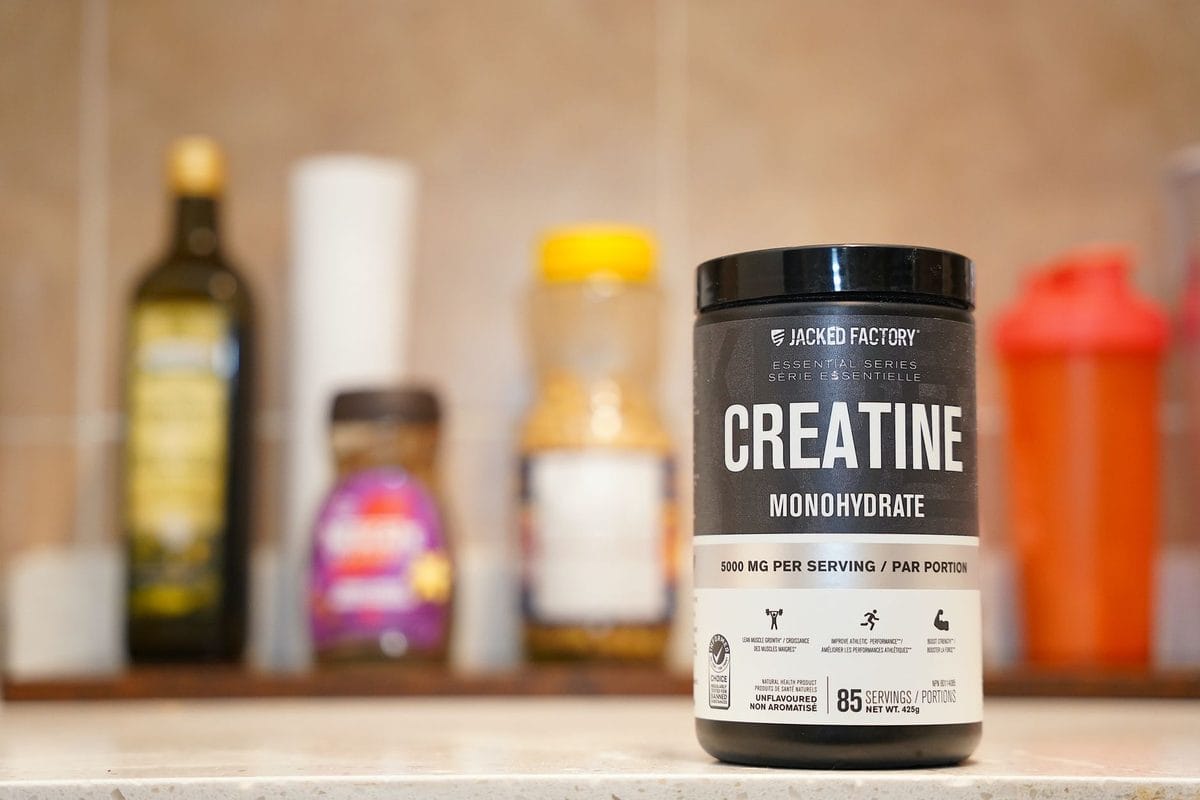
Walk into any decent gym and the supplement shelf behind the counter looks like a chemistry set designed by a marketing department. Fat burners with cartoon flames on the label, pre-workouts promising a "euphoric pump," recovery blends with eleven ingredients and a proprietary name nobody can pronounce. Most of it is flavoured powder chasing your wallet, dressed up with a research citation on the label that, if you actually pulled it, tested something else entirely. One product on that shelf has genuinely earned its space, and it costs less than your gym membership's monthly direct debit.
The one claim that's actually earned it
Creatine monohydrate has been studied for over three decades, and it remains the most heavily researched supplement in sports nutrition — full stop, no asterisk. Your muscles store creatine as phosphocreatine, which your body uses to rapidly regenerate ATP, the fuel for short, hard bursts of effort. Top up that store through supplementation and you typically get a bit more in the tank for the last rep or two of a heavy set, which compounds into more total training volume over weeks and months. That's the entire mechanism, and it's not exotic: it's the reason creatine has outlasted every fad that's tried to dethrone it since the 1990s. The International Society of Sports Nutrition has repeatedly affirmed it as safe and effective for increasing strength, power output and lean tissue when combined with resistance training, and unlike most of what's sold as "science-backed," this one has decades of independent replication behind it rather than a single in-house study funded by the brand selling it. If you lift weights with any seriousness — three sessions a week, progressive loading, the basics done properly — creatine is one of maybe two or three supplements that will move the needle at all. Protein intake and sleep will do more for you than any powder ever will, but of the things you can buy in a tub, this is the one with a genuine case behind it.
What creatine actually won't do for you
It will not turn a mediocre training programme into a good one.
That's the part the marketing conveniently skips. Creatine is not an anabolic steroid, it doesn't build muscle by itself, and it won't compensate for a diet that's short on protein or a programme that isn't progressively overloading anything. What it does is let you squeeze out marginally more reps at a given weight, which only matters if you're actually pushing those sets to somewhere near their limit and eating enough to recover from them. Take it while training twice a month and you'll notice roughly nothing. Take it while training properly three or four times a week with your protein intake sorted, and the small edge on each session adds up into a genuinely different training block six months from now. Plenty of men buy the tub expecting it to do the work their programme should be doing, get frustrated after a fortnight of no visible change, and quietly stop — the supplement was never the problem in those cases, the four-week block that never progressed past the same working weights was. Fix the programme first and the tub earns its keep; skip that step and no amount of creatine will save a plan that isn't actually asking anything new of your muscles.
Loading phase or straight to maintenance?
You've got two routes to a saturated muscle. The loading protocol takes roughly 20 grams a day, split into four 5-gram doses, for five to seven days, which saturates your stores fast — useful if you've got a competition or a specific training block starting soon and don't want to wait. The slower route is simply 3–5 grams daily from day one, which reaches the same saturation point in three to four weeks without the loading phase's larger initial water shift. Skip loading unless you've got a genuine deadline. There's no performance advantage to rushing it, and the loading phase is exactly when people notice the most bloating and the occasional stomach complaint from necking four servings of powder in a day.
Dosing and the timing myths that won't die
The "creatine window" — the idea that you must take it within some tight period around training or lose the benefit — is a hangover from early pre-workout marketing, not from how the muscle actually works. Creatine builds a saturated pool over weeks; a single day's timing does nothing to that pool one way or the other. Take your 3–5 grams with breakfast, with your post-workout shake, or dissolved in water before bed — consistency across weeks is what matters, not the clock. Take it daily, including rest days, because your muscles don't stop needing topped-up phosphocreatine stores just because you didn't train that morning.
Monohydrate versus the "advanced" forms
Creatine HCl, buffered creatine (sold under names like Kre-Alkalyn), micronised creatine, liquid creatine — the supplement industry has spent twenty years trying to convince you that plain monohydrate is the budget option and something else is the premium one. It isn't. Head-to-head comparisons against monohydrate have never produced a meaningful strength or muscle advantage for any of these alternative forms, and the claims around better absorption or less bloating are marketing copy rather than a demonstrated outcome you'd notice in the mirror or on the bar. Monohydrate is also the form used in essentially every study that built creatine's reputation in the first place, which means when a brand tells you its buffered version is "more advanced," you're entitled to ask what exactly it's more advanced than — because it certainly isn't the evidence.
Buy plain creatine monohydrate and nothing else. That's not a hedge, that's the recommendation: any tub charging a premium for HCl or Kre-Alkalyn is charging you more for a product with no evidence of doing more than the cheaper one sitting next to it on the shelf.
Who benefits most from supplementing
Vegetarians and vegans typically see the biggest jump of anyone who starts, and there's a straightforward reason for it. Dietary creatine comes almost entirely from meat and fish, so anyone who doesn't eat either is starting from a lower baseline muscle store than an omnivore training the same programme — supplementing tends to close that gap noticeably rather than marginally. Older lifters are the other group worth flagging: resistance training combined with adequate creatine intake is one of the more reliable tools for holding onto muscle mass and strength as the decades add up, which matters more the further you get from your twenties, not less. None of this means younger meat-eating lifters get nothing from it — they still see the strength and volume benefits described above — it just means the two groups above tend to notice the difference faster and more clearly than everyone else. Either way, give it the full three to four weeks before deciding whether it's doing anything, because judging it after four days is judging it before it's had a chance to saturate anything.
The water retention question
Creatine draws water into your muscle cells, and during the first couple of weeks — especially if you load — it's common to see the scale creep up by a kilogram or two. That's intracellular water sitting inside the muscle, not the kind of puffy retention you'd get from a big salty meal, and it isn't fat gain. The catch: this isn't universal, and a smaller number of lifters notice barely any weight shift at all, which has nothing to do with whether the supplement is "working" for them — response varies, and the scale isn't the metric that tells you creatine is doing its job anyway. If you're cutting for a specific weight class or you've got a physique shoot booked, that's worth planning around; for everyone else training for strength and size, it's a non-issue you'll stop thinking about within a fortnight.
The kidney myth
Your kidneys are not in danger from a compound your own body already makes and stores in your muscle tissue. Creatine supplementation raises serum creatinine — a blood marker doctors use to estimate kidney function — because creatine breaks down into creatinine as a normal byproduct, and this occasionally gets flagged on a routine blood panel by a GP who doesn't know you're supplementing. That's a measurement artefact, not kidney damage, and it's worth mentioning to your doctor that you take creatine before any blood test, so nobody chases a phantom problem for a fortnight. In healthy individuals with normally functioning kidneys, decades of research and everyday use by professional and recreational athletes alike have not turned up evidence of harm at standard doses, which is a considerably better safety record than plenty of things men over 35 take without a second thought. The one group that should actually be cautious is anyone with pre-existing kidney disease or a family history of it — that's a real conversation to have with a doctor before starting, not a reason for the other 95% of lifters to avoid a supplement this well studied.
How to actually buy it well
The entire category has one product that matters and a hundred variations on packaging it expensively. Here's how to shop it properly:
- Plain creatine monohydrate powder is the whole shopping list — unflavoured if you can stand it, since flavoured versions and "creatine gummies" mark up the price for sugar and additives you don't need.
- Creapure certification is worth checking for if you want a purity benchmark; it's a German-manufactured monohydrate standard that several reputable UK brands license and print on the label, and it's a reasonable signal you're not buying a poorly filtered generic.
- Work out price per gram, not price per tub — a 500g tub of plain monohydrate from a UK sports nutrition brand typically runs somewhere around £10–£18, which works out to pennies per daily dose, while "advanced" blends chasing the same result can run two or three times that for a smaller container.
- Skip anything marketed as a "creatine complex," a "creatine matrix," or similar bundled with a dozen other ingredients at fractional doses, to name a few of the dressed-up variants — you can't tell what's actually in an effective amount, and you're paying for filler dressed up as innovation.
- Mixing it into water, juice, or a protein shake all works fine. It doesn't dissolve perfectly and you may see a bit of settling at the bottom of the glass — that's normal, not a quality problem.
A kilogram of plain monohydrate lasts roughly six to seven months at the standard 5-gram dose and will outperform almost everything else on that supplement shelf combined. Spend your money there, and spend the rest of your supplement budget on food.