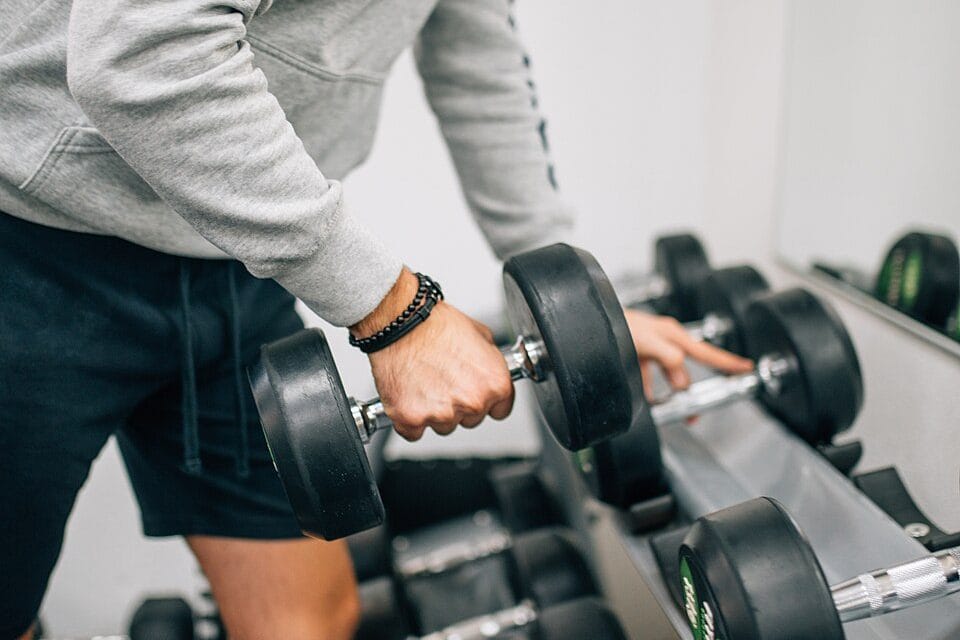
A guy walks into his gym in week fourteen of Zepbound, thirty-one pounds lighter than he was on New Year's Day, and can't figure out why his bench press dropped from 225 to 195 while the scale keeps moving in the right direction. His shirts hang differently now — looser everywhere, including his shoulders, which is the part nobody warned him about. His doctor is thrilled with the number on the scale. His training log tells a different story. That gap between what the scale says and what the mirror and the barbell say is the single biggest blind spot in how GLP-1 drugs get talked about right now. Semaglutide and tirzepatide — sold as Ozempic, Wegovy, Mounjaro, and Zepbound — are genuinely effective at driving fat loss, and the appetite suppression is real enough that most men lose weight without trying very hard. But weight loss and fat loss are not the same thing, and for a man who has spent years building strength, the difference shows up on the bar before it shows up anywhere else.
What GLP-1 Drugs Actually Do to a Lifter's Body
These drugs work by mimicking a gut hormone that slows stomach emptying and blunts appetite signals to the brain. The practical result is that a plate of chicken and rice that used to disappear in ten minutes now sits half-finished after three bites, and a second helping feels physically unappealing rather than just unnecessary. For fat loss alone, that's the whole mechanism working as intended. For a lifter trying to preserve muscle through a calorie deficit, it's a direct threat to the one variable that matters most: getting enough protein in on a consistent daily basis.
Total daily calorie intake on these drugs commonly drops by 500 to 1,000 calories without any deliberate dieting, and protein intake tends to fall even faster than total calories because dense, harder-to-digest foods like steak and chicken breast are exactly what early fullness makes unappealing. A man who used to comfortably eat 180 grams of protein a day on autopilot can find himself down at 90 or 100 grams within a few weeks, with no conscious decision to cut back — his body just stopped wanting the food that used to get him there.
The Lean-Mass Math Nobody Tells You at the Pharmacy
Research on semaglutide and tirzepatide has consistently found that when resistance training isn't part of the picture, somewhere between a quarter and 40 percent of total weight lost on these drugs is lean mass, not fat. That range shows up across multiple trials in older adults and in people with obesity, and it's a far higher lean-mass loss rate than what you'd see from a well-run traditional diet paired with lifting, where lean mass loss typically stays in the single digits as a share of total weight lost. Prescribing doctors track the scale number and the A1C, not the body composition scan, so this trade-off rarely gets mentioned in the fifteen-minute appointment where the prescription gets written.
A DEXA scan runs $50 to $100 at most sports medicine clinics and imaging centers, and it's worth the money before starting one of these drugs and again at the three-month mark. Without it, use strength maintenance as your proxy: if your working weights on the big lifts are dropping faster than your body fat percentage looks like it's dropping in the mirror, you're losing muscle, not just fat, and it's time to adjust the plan rather than wait it out.
The Protein Target Has to Go Up, Not Stay the Same
The standard advice for a cutting phase is roughly 1 gram of protein per pound of bodyweight. On a GLP-1 drug, that's the floor, not the target — aim closer to 1.1 to 1.2 grams per pound, because the drug is actively working against your appetite for the exact foods that get you there. A 190-pound man should be landing somewhere around 210 to 230 grams of protein a day, split across five or six smaller meals instead of three large ones, since early fullness makes a 40-gram protein meal feel like a genuine physical struggle by the third bite. Whey isolate is the practical fix here, not a nice-to-have. A scoop of Isopure or Optimum Nutrition Gold Standard Isolate delivers 25 grams in a form that goes down easier than an equivalent serving of chicken, and it doesn't compete for the small amount of stomach volume you actually have appetite for. Cottage cheese and Greek yogurt work the same way — slower to eat, easier to tolerate, and dense enough in protein that two servings a day can cover a third of the daily target without ever feeling like a meal you had to force down.
Training Has to Change Too, Not Just Diet
Keep the weight on the bar heavy and cut the volume, not the other way around. Men on an aggressive GLP-1-driven deficit are running on less fuel and often less sleep quality than usual, and trying to maintain a five-day bodybuilding split through that is how you end up both under-recovered and under-fed at the same time. Drop from five sessions to three full-body or upper/lower days a week, keep the top sets at 80 percent or more of what you'd normally lift, and cut total working sets per muscle group by roughly a quarter.
Resistance training is not optional on these drugs.
It's the single lever that determines whether the weight coming off is fat or muscle, and skipping the gym because "the weight's coming off anyway" is exactly how a man ends up thirty pounds lighter and weaker than he was at the start, with a body that looks smaller everywhere rather than leaner in the places that matter.
The Mistakes That Turn a GLP-1 Cut Into a Skinny-Fat Transformation
These are the patterns that show up over and over in men who lose more strength than the drug's own mechanism would explain — not a complete list, but the ones worth catching early:
- Stopping lifting or dropping to once a week because the scale is moving without it — the scale doesn't know the difference between fat and muscle, and neither does the drug.
- Letting nausea or early fullness excuse chronically low protein intake for weeks at a time instead of switching to liquid and semi-liquid protein sources that go down easier.
- Adding more cardio to "help the weight loss along" while volume and intensity in the weight room quietly drop, which speeds up muscle loss rather than fat loss specifically.
- Dropping creatine because appetite is down and supplements feel like one more thing to force down; creatine intake doesn't need to compete with meal volume and there's no reason to cut it.
- Timing the weekly injection right before a heavy training day, when GI side effects are typically worst in the first 48 to 72 hours post-dose.
That last one is a fixable scheduling problem, not a training problem, and it gets ignored constantly. Most men on a weekly semaglutide or tirzepatide dose report the worst nausea and appetite suppression in the two to three days right after the injection. Schedule the shot for the evening after your hardest lifting session of the week, not the morning before it, and you get a full workout in before the side effects peak.
A Nuance Worth Sitting With
None of this is an argument against these drugs — for a lot of men carrying real metabolic risk, the fat loss benefit outweighs the muscle-preservation cost even in a worst-case scenario. But it is an argument against treating them as a substitute for training rather than a tool that changes what training and eating need to look like while you're on them. The men who come out the other side of a GLP-1 course looking leaner and stronger are, without exception, the ones who kept lifting hard through the whole thing and treated protein intake as a non-negotiable daily target rather than whatever appetite allowed that day.
Sedentary men starting one of these drugs need resistance training even more than lifters already do, not less — a body with no strength training stimulus at all will burn through lean mass fastest of anyone, GLP-1 or not. If you're on one of these drugs and haven't set foot in a gym yet, that's the first call to make, before the next injection, not after the weight is already gone.
Track three numbers through the whole course: bodyweight, your working weight on one main lift, and grams of protein per day. If the first one drops while the second two hold steady, the plan is working. If all three drop together, it's time to eat more protein, cut cardio volume, and let the drug do the job it's actually good at while the weight room does the job it can't.