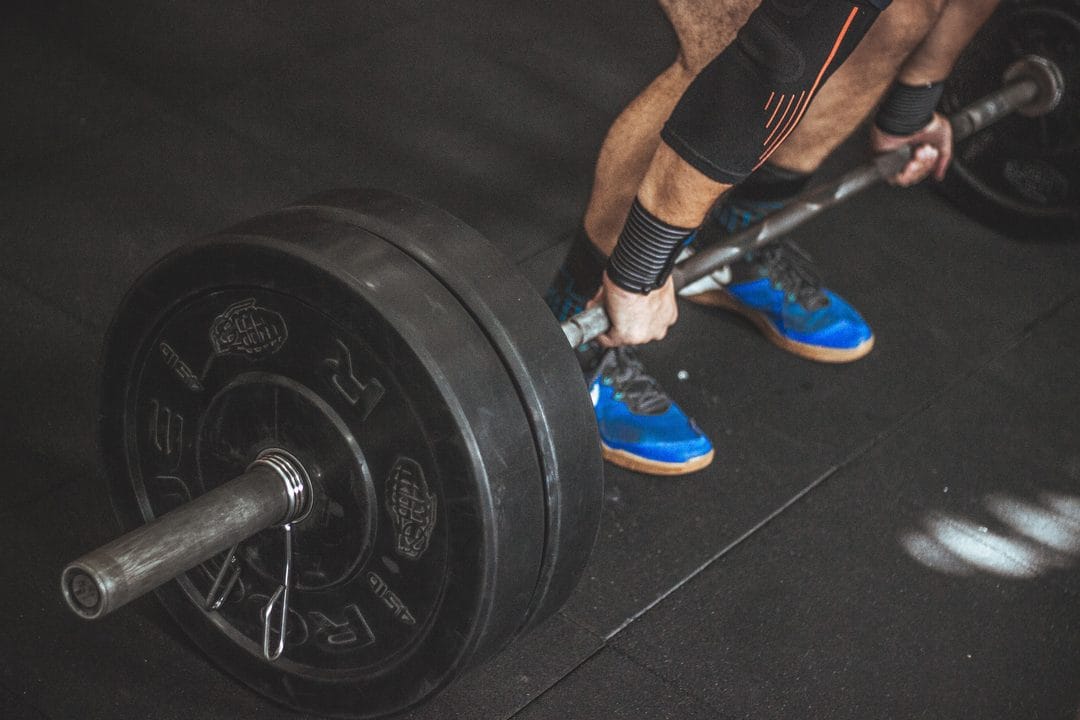
Watch a busy gym floor for twenty minutes and you'll spot the same failure pattern over and over: a man pulling a heavy deadlift, hips locking out clean, back staying tight — and the bar drops not because his legs or back gave up, but because his hands did. Grip is the quietest limiting factor in strength training, and it's also the one almost nobody trains directly. Ask ten regulars at any gym what their squat or bench numbers are and you'll get an instant answer. Ask what their grip strength is and most will shrug — they've never tested it, let alone trained it as its own thing.
That gap matters more than it looks. The PURE study, published in The Lancet in 2015 and tracking grip strength across roughly 140,000 adults in 17 countries, found hand-grip strength predicted overall mortality and cardiovascular outcomes more strongly than systolic blood pressure did — it's become a standard proxy measurement in ageing research precisely because it's so tightly linked to whole-body physical capacity. For a lifter, the practical version of that finding is simpler: if your grip caps out at 40kg on a dynamometer, it's going to cap your deadlift, your rows, and your pull-up volume regardless of how strong your lats and hamstrings actually are.
Three grip failure modes, and they're not the same problem
Crush grip, pinch grip and support grip are distinct qualities, and training one barely transfers to the others — this trips up a lot of men who assume "grip training" means one exercise done well. Crush grip is what closes a hand around a gripper or a jar lid. Pinch grip is what holds a plate by its edge. Support grip — sometimes called static or hang grip — is what keeps a barbell from rolling out of your hands during a max-effort deadlift or a long set of dead hangs, and it's the one that matters most for lifting specifically. A man who can crush a Captains of Crush No. 2 gripper (which requires roughly 90kg of force) can still fail a heavy deadlift at the hips if his support grip hasn't been trained the same way.
Support grip responds best to time-under-tension work rather than single-rep max efforts. Dead hangs from a pull-up bar, farmer's carries, and towel-wrapped bar holds all train the forearm musculature to fire continuously rather than in one crushing burst, which is exactly the demand a 60-second heavy set or a long carry places on it. Building this specific quality is where most lifters see the fastest transfer to their main lifts — a stronger support grip means the bar stops slipping at rep six of a row, and pull-up sets stop ending because of forearm burnout three reps before the back muscles were actually done.
What a grip session actually looks like
You don't need a dedicated day for this — twice a week, tacked onto the end of an existing session, is enough to see change within six weeks. A simple, effective block: farmer's carries for 40 metres at a weight that's genuinely heavy (start around 50–60% of your bodyweight per hand and build from there), followed by dead hangs for max time across three sets, followed by plate pinches held for time using two 10kg or 15kg plates smooth-side out. That's roughly ten minutes of work, done after the main lifts when the rest of the body is already fatigued but the forearms are fresh.
Equipment doesn't need to be expensive. A pair of Rogue Fat Gripz (around £35) turns any barbell or dumbbell into a thicker-handled implement that forces the hand to work harder on every set you'd already be doing — deadlifts, rows, curls, farmer's walks. A Captains of Crush gripper starts at roughly £20 for the lower-tension models and gives you a fixed, repeatable benchmark to test progress against month to month, which most bodyweight or carry-based grip work doesn't offer on its own. Neither is essential — dead hangs and carries cost nothing — but the gripper specifically solves the "am I actually getting stronger" tracking problem that carries alone can't answer precisely.
Where straps become the wrong answer
Lifting straps have their place — heavy back work where the point of the set is to overload the lats, not to test grip endurance, is a legitimate reason to strap in. But plenty of men reach for straps the moment grip starts to feel like the limiting factor on a deadlift, which trains the exact weakness away rather than fixing it. If grip is failing before your target muscle on 80% of your working sets, that's a signal to build the grip, not to remove the stimulus that would have built it. Save the straps for genuine back-specialisation days — rack pulls, heavy shrugs, high-volume row work where grip failure would cut a set short before the back gets its actual training effect — and let grip take the strain everywhere else.
There's a real trade-off here worth being honest about: training grip hard and training grip smart aren't automatically the same thing. Forearms and hands recover slower than most lifters expect, and stacking heavy crush work, thick-bar deadlifts and daily dead hangs in the same week is a fast route to elbow tendon irritation — golfer's or tennis elbow shows up disproportionately often in lifters who ramp grip volume too quickly. Two dedicated grip sessions a week is the ceiling for most intermediate lifters; three is pushing it unless the rest of the pulling volume that week has been deliberately trimmed back.
Fitting it around an existing programme
The men who stick with grip work longest aren't the ones who add a fourth training day for it — they're the ones who bolt it onto sessions they're already doing, usually pull day or the day that ends with deadlifts. Do the carries and hangs after the main lifts, never before: pre-fatiguing the forearms before a heavy pulling session is a fast way to turn a 5-rep-max deadlift attempt into a grip-limited miss that has nothing to do with how strong your posterior chain actually is on that day. If a session is already running long, cut a hang set rather than skip the whole block — two committed sets beat three rushed ones, and consistency across weeks matters more than any single session's volume.
Tracking progress without overcomplicating it
Test dead hang time and farmer's carry distance every four weeks, same weight, same conditions, and log it — that's the entire tracking system, and it's more useful than a dynamometer for most home-gym setups because it directly mirrors what you're using grip for. A man starting from a 20-second dead hang typically sees that climb past 45 seconds within six to eight weeks of consistent twice-weekly work, and the carryover shows up first as fewer failed reps at the top end of deadlift and row sets, well before the hang time itself becomes impressive. Grip is one of the few strength qualities where the training investment is genuinely small — ten minutes, twice a week — against a payoff that touches nearly every pulling movement in the programme.