The Thirty-Minute Shake Myth
You've seen him — the guy who racks his last set, checks his phone, and starts chugging a shake before he's even wiped down the bench. Ask him why and he'll tell you about the "anabolic window," that narrow slice of time right after training when your muscles are supposedly primed to soak up protein like a sponge. Miss it, the story goes, and the workout was partly wasted. It's one of the most durable myths in strength training, repeated so often in locker rooms and supplement marketing that most lifters never stop to check where it actually came from. The obsession isn't harmless, either — guys skip conversations, cut post-workout stretching short, and once in a while eat a second breakfast they didn't need, all in service of a clock that turns out not to matter nearly as much as they think. Walk into any gym at 6 a.m. and you'll find at least one shaker bottle sitting on the floor next to a loaded barbell, ready before the first warm-up set is even racked.
The idea traces back to research from the 1990s and early 2000s on post-exercise nutrient timing, much of it conducted on subjects who hadn't eaten in six to eight hours before training. Under those specific conditions, a fast-digesting protein source right after exercise does produce a measurable spike in muscle protein synthesis. The problem is what happened next: that narrow finding got stretched into a blanket rule for every lifter, regardless of when they last ate, and turned into a reliable reason to sell a shaker bottle and a tub of whey at a markup.
What a Decade of Research Actually Found
In 2013, Alan Aragon and Brad Schoenfeld published a review in the Journal of the International Society of Sports Nutrition that took the anabolic-window claim apart piece by piece. Their conclusion: for anyone who had eaten a normal meal within a few hours of training, the timing of post-workout protein made little measurable difference to muscle growth over weeks and months. The same year, Schoenfeld teamed up with Aragon and James Krieger on a follow-up meta-analysis specifically testing protein timing against muscle mass and strength gains in resistance-trained lifters — and again, once total daily protein intake was matched between groups, the timing variable added almost nothing.
Then in 2018, a meta-regression by Morton and colleagues in the British Journal of Sports Medicine pooled data from dozens of studies and found that gains in muscle size tracked closely with total daily protein up to roughly 1.6 grams per kilogram of bodyweight, with returns flattening out somewhere between there and 2.2 grams. Nobody in that analysis needed a stopwatch. What mattered was whether the day's total protein hit a threshold — not whether it arrived at minute 4 or minute 40 after the last rep.
Total Daily Intake Is the Number That Actually Moves the Needle
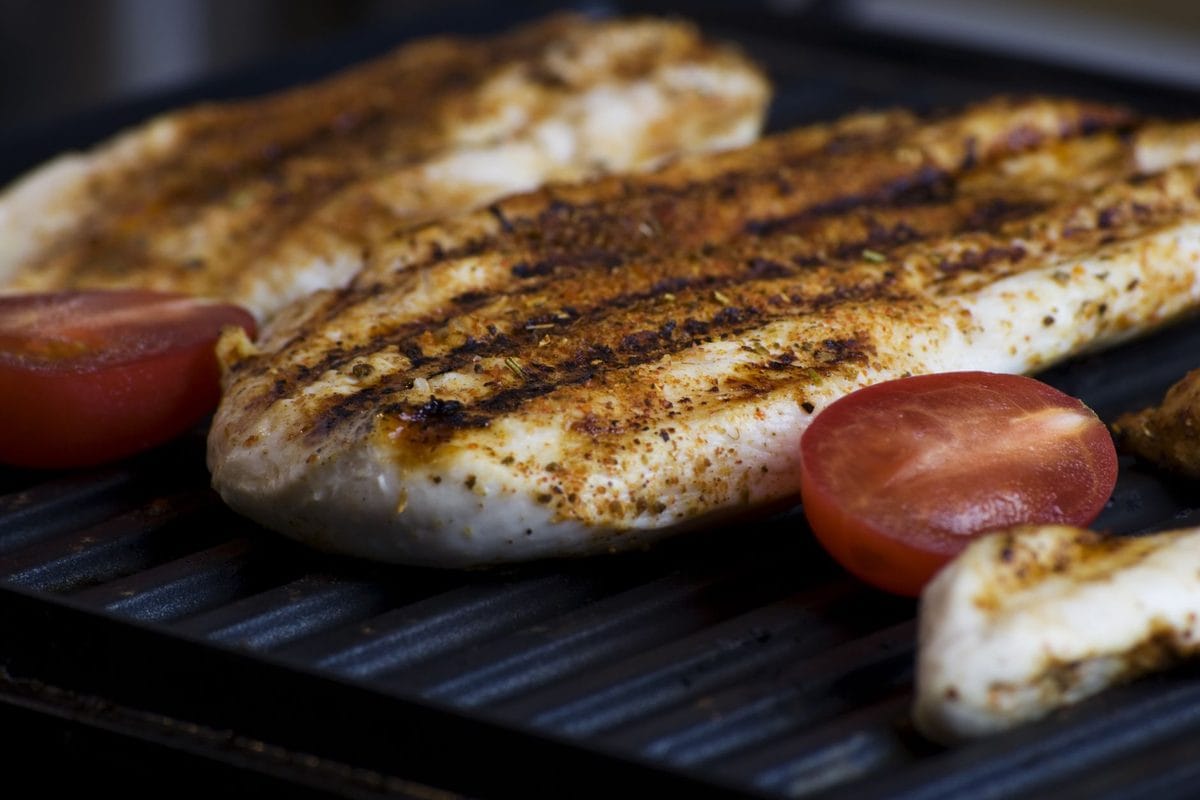
If you train three to five times a week and you're past the beginner phase, aim for 1.6 to 2.2 grams of protein per kilogram of bodyweight every day. For a 90-kilogram man, that's roughly 145 to 200 grams — somewhere around a chicken breast, a scoop of whey, a couple of eggs, and a serving of Greek yogurt spread across the day. Hit that number consistently and the difference between drinking your shake at minute 10 versus minute 60 becomes background noise compared to everything else you're doing right or wrong.
Stop timing your shake to the minute. That thirty-minute window is not real for anyone who has already eaten within the last few hours, and chasing it is a worse use of your attention than checking whether you actually hit your protein total by 9 p.m. This is the single biggest mental shift most lifters need to make, and it costs nothing except the discipline to stop watching a clock that was never doing anything for you.
Per-Meal Distribution Still Deserves Some Attention
Total intake is the main lever, but it isn't the only one. Muscle protein synthesis responds to protein in a dose-dependent way up to a point, and most research puts that per-meal ceiling somewhere around 0.4 grams per kilogram of bodyweight, or roughly 30 to 40 grams for most men. Eat far above that in one sitting and the extra protein still gets used — just less efficiently for building new muscle tissue, and more as fuel or stored energy. Eat far below that leucine threshold, somewhere around 2 to 3 grams, and you may not trigger a full synthesis response at all, even if your daily total looks fine on paper.
Spread your protein across four meals instead of cramming it into two if you want the per-meal science working in your favor. A rough day might look like: eggs and Greek yogurt at breakfast, chicken or fish at lunch, a whey shake as a bridge in the afternoon, and a larger portion of meat, fish, or tofu at dinner. None of that requires precision timing — it requires not skipping meals and not backloading your entire protein intake into one plate at 8 p.m. because you didn't eat enough all day, which is the actual pattern that undermines a lot of otherwise solid training programs.
Whey, Casein, and the Fast-vs-Slow Question
A related myth deserves the same treatment: the idea that you need fast-digesting whey immediately after training and slow-digesting casein before bed, as if timing the protein's digestion speed to the clock face were a separate science from timing the meal itself. Whey does raise blood amino acid levels faster than casein — that part is real chemistry, not marketing. But the practical difference between the two shows up mainly in how full you feel and how convenient the format is, not in some precision digestion schedule you need to hit. A tub of Optimum Nutrition Gold Standard whey is genuinely useful for the ten minutes between finishing a set and getting home to cook, and a scoop of casein or a bowl of cottage cheese before bed is a reasonable way to add protein to a day that's otherwise short on it. Neither one is doing anything magical that a well-timed chicken breast couldn't also do.
Where this actually matters is convenience, not physiology. A busy man who skips his post-workout shake because he read that timing doesn't matter, and then also skips dinner because he got home late and wasn't hungry, has made a real mistake — just not the one the anabolic-window marketing warned him about. The shake's value is that it's easy to drink in a car or at a desk, not that it arrives inside some magic thirty-minute box.
When Timing Actually Does Matter
Except when it does.
There are real exceptions to the "just hit your total" rule, and pretending otherwise would be its own kind of oversimplification. Men doing extended fasted training — 16:8 intermittent fasting with a workout at hour 14 or 15, for instance — go into the session with lower circulating amino acids, and getting protein in reasonably soon afterward (within an hour or two, not instantly) does more work for them than it would for someone who ate breakfast at 7 a.m. and trained at 6 p.m. Older lifters face a different problem: research on "anabolic resistance" shows men over roughly 50 need a larger per-meal protein dose, sometimes 40 grams or more, to trigger the same muscle-building response a 30-year-old gets from 20 to 25 grams. If that's you, spacing and dose size matter more than they do for a guy in his early thirties.
Beginners returning after a long layoff sit somewhere in between. Muscle protein synthesis in detrained tissue is more sensitive to a well-timed dose in the first few weeks back, which is part of why "newbie gains" happen fast — but that sensitivity fades within a month or two of consistent training, at which point total daily intake takes back over as the dominant factor.
What This Means for a Guy With a 6 a.m. Alarm and a Family Dinner at 7
Most of the men reading this aren't chasing a physique competition. You've got a job, maybe kids, a training window that has to fit around both, and limited patience for tracking macros to the gram. The good news is that the research rewards exactly the kind of routine that busy life already forces on you: three or four real meals, protein at each one, and a shake in reserve for the days the schedule falls apart.
- Hit 1.6 to 2.2 grams of protein per kilogram of bodyweight most days — a kitchen scale for a week or two is enough to calibrate your eye after that.
- Put at least 30 grams of protein on your plate at three or four meals rather than saving it all for dinner.
- If you train fasted or you're over 50, get a real meal in within an hour or two of finishing — not because of some magic window, but because your body's response curve is genuinely different.
- Keep a shake around for the days work runs long, but treat it as a backup plan, not a ritual.
The guy setting a phone alarm for his post-workout shake isn't lazy or wrong to care — he's just aiming his attention at the wrong dial. Move that attention to what you eat over the full day, and the rest of the routine gets a lot easier to sustain past week six.